How a Column-Wheel Chronograph Works
There are two schools in watchmaking: those who trigger a chronograph the way you hit “start” at the gym, and those who want to feel, under the fingertip, that crisp little click—almost aristocratic—of a well-bred mechanism. If you’re here, you’ve already guessed that the column-wheel chronograph isn’t a slogan but an architecture: a way of commanding measured time with refined mechanical logic, closer to a conductor than a simple switch.
It gets talked about a lot—sometimes too quickly. “Column wheel = better.” End of discussion. Except it isn’t. The column wheel is neither a magic wand nor a moral badge. It’s a technical solution: brilliant when well executed, demanding to manufacture and adjust, and it explains why some chronographs feel as though they glide through time while others seem to snag as they go.
What the column wheel is really for
A chronograph is a watch capable of measuring elapsed time independently of the time display. To do that, it needs three fundamental actions, triggered by the pushers: start, stop, reset. And they must happen in the right order, without the mechanism contradicting itself, without parts crashing into one another, and ideally without any visible jolt of the hand.
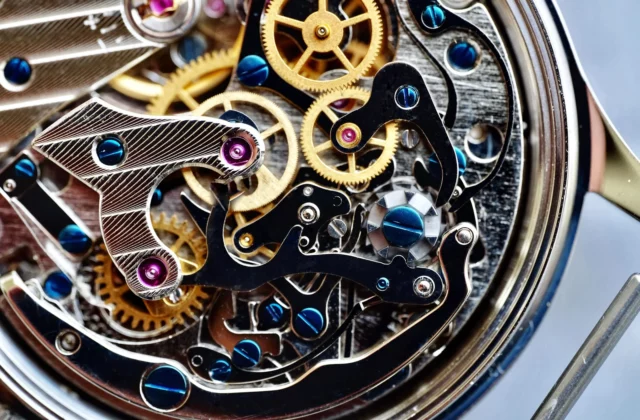
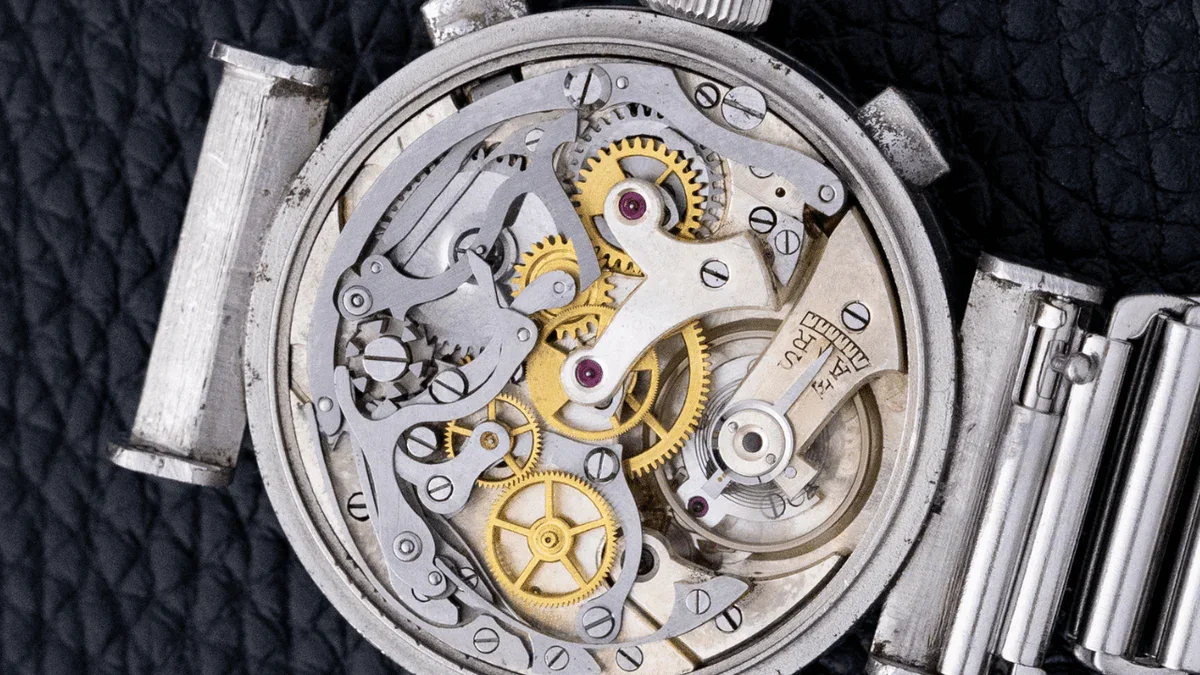
The column wheel is the “distribution” organ. Picture a small wheel fitted with columns (vertical pillars) and recesses between them. As it turns one step with each press, it allows or blocks levers. It doesn’t do the work in place of the other parts; it conducts the ballet.
The goal isn’t merely the component’s beauty. It’s a control that’s more progressive, more legible in its kinematics, and often a pusher feel that’s crisper and more consistent—when everything is properly adjusted.
Mechanics on stage: a chronograph is a theatre of levers
To understand how a column-wheel chronograph works, you need to identify the main players.
1) The column wheel, the conductor
It turns in increments, generally driven by a click and a spring. Each press on a pusher advances the wheel by one step. As the columns pass beneath the ends of the levers, they determine which levers are free to pivot.
This “column” format is old, historically considered nobler than cam switching—not by magic, but because it demands finer geometry, more costly machining, and more exacting adjustment.
2) The levers, interpreters of the command
The levers translate the column wheel’s position into concrete actions: engaging the clutch, immobilising or releasing the chronograph wheel, permitting the reset, and so on. This is where the watch becomes a “logical” mechanism.
3) The clutch, the link between running and measuring
For the chronograph hand to turn, energy must be transmitted from the base going train to the chronograph runner. Two major families exist:
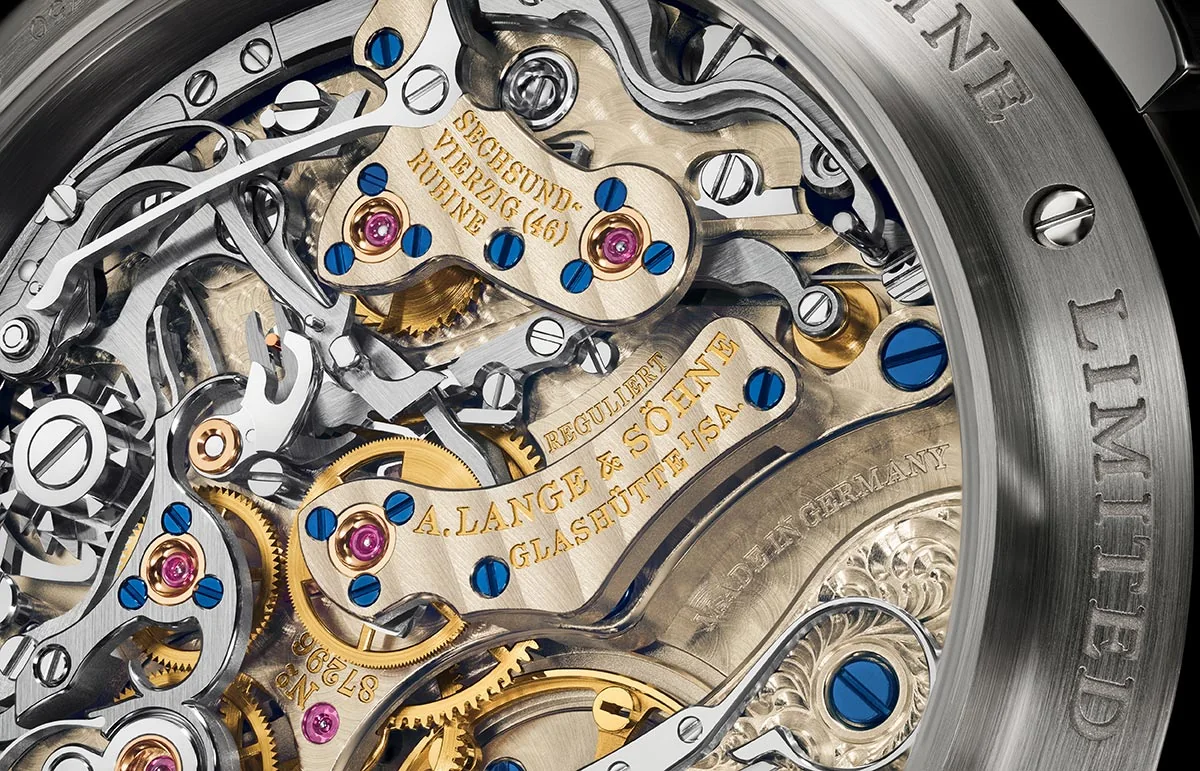
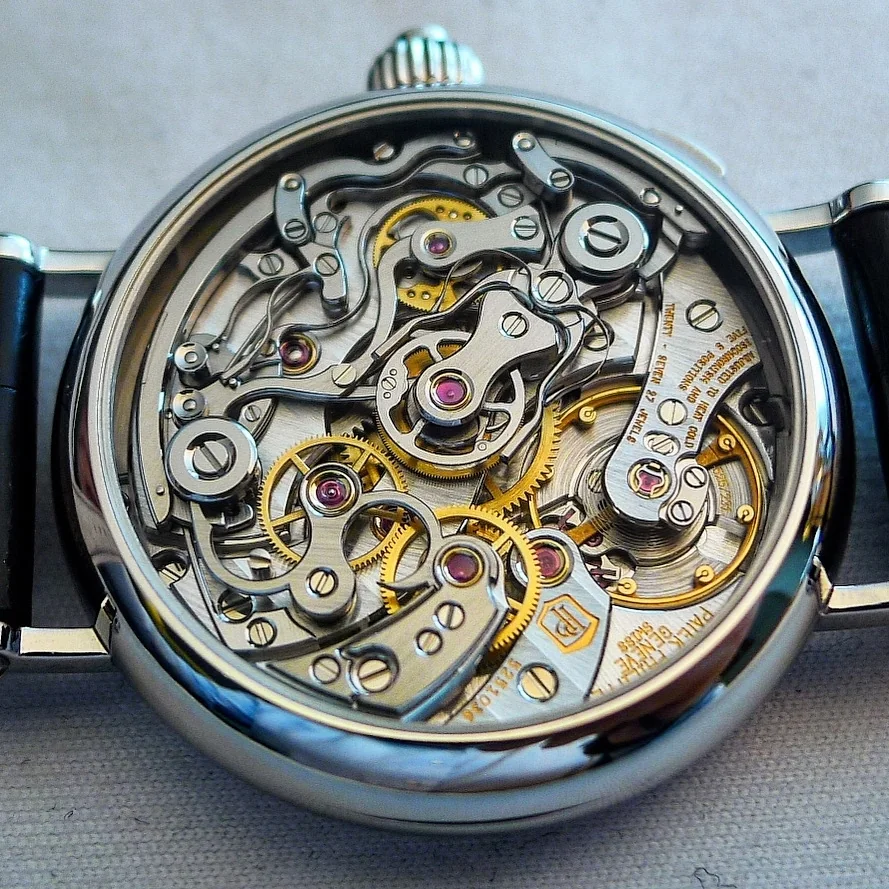
- Horizontal clutch, also called “lateral”, with a wheel that moves to mesh with another. Very readable from the caseback side and often spectacular, but it can cause a small jump of the hand at start if the adjustment isn’t perfect.
- Vertical clutch, where engagement happens by friction, like a miniature car clutch. Starts are often smoother, with less “stutter”, but the architecture is less visually “demonstrative”.
The column wheel can control either one. It doesn’t dictate the clutch type; it dictates a method of control.
When you stop the chronograph, a part comes in to brake the chronograph wheel so it halts without bounce. And when you reset, hammers drop onto hearts (those famous heart-shaped cams on the counter wheels) to snap the hands back to 12 instantly. The system is as elegant as it is implacable: one sharp blow, and everything returns to its place.
Start, stop, reset: the column wheel in three acts
Act 1: start
You press the pusher at 2 o’clock. The column wheel advances one step. A lever that was previously blocked is released and pivots. Depending on the movement:
- the horizontal clutch moves and meshes,
- or the vertical clutch clamps and transmits torque.
At the same time, the brake lifts so it no longer rubs against the chronograph wheel. The central chronograph hand sets off. If it “jumps”, it’s rarely the column wheel’s fault; more often it’s the meshing adjustment, excessive play, or a tooth arriving badly to the rendezvous. The column wheel simply authorises the action.
Act 2: stop
Second press. The column wheel advances again. This time it orders the opposite: disengage the clutch, then apply the brake. The chronograph comes to a halt. Proper adjustment delivers a pusher feel that is firm and clean—not something mushy that brings to mind a leaking pen.
Act 3: reset
You press the pusher at 4 o’clock. The mechanism first checks a simple rule: you don’t reset a running chronograph (except on a flyback). The column wheel must be in a position that permits the hammers to fall. If everything is coherent, the hammers drop onto the hearts of the counters—chronograph seconds, minutes, sometimes hours—and everything snaps back to 12 in a fraction of a second.
It’s the moment you grasp a chronograph’s intellectual superiority: it doesn’t “erase” a position; it mechanically forces an absolute return—geometric, inevitable.
Column wheel vs cam: why the comparison never goes away
The cam chronograph, often referred to as “cam switching”, replaces the column wheel with a profiled part that flips levers. The advantage is simpler production and often better robustness at a given cost. The downside is that pusher feel depends more on a toggle spring and can seem less silky.
But beware the lazy reflex. There are outstanding cam chronographs, and column-wheel chronographs that are poorly adjusted. The column wheel isn’t a diploma; it’s a demand.
Why some column-wheel chronographs feel so “satisfying” under the finger
That famous “feeling” comes from several factors:
- A more even lever travel, with the columns guiding the pivot without a brutal shove.
- Better-defined bearing surfaces, with fewer vague friction zones.
- Clearer synchronisation between lifting the brake and engaging the clutch.
When it’s all well executed, you’re not “pushing” to overcome a mechanism; you’re triggering a sequence. You feel the watch understands what you’re asking of it. It’s almost insulting to the human—but very reassuring to the collector.
Horizontal or vertical clutch: the column wheel isn’t everything
Many people associate the column wheel with the horizontal clutch, because the great historical chronographs put that spectacle on display through the caseback. Yet the column wheel + vertical clutch combination is common in modern calibres, notably to limit the jolt at start and allow prolonged chronograph use with less impact on balance amplitude.
In other words: if you like leaving the chronograph running as an animated central seconds, a vertical clutch is often a useful ally. If you like watching teeth come alive and approach each other like tango dancers, the horizontal has an almost indecent charm.
The special case of flyback: when reset becomes a pilot’s gesture
A flyback chronograph lets you reset and restart with a single press, without going through a stop. Here, the column wheel plays an even more delicate role: it must allow the hammers to fall while managing the clutch so as not to butcher the transmission.
This is exactly the kind of complication that reveals the quality of the architecture and adjustment. A poorly conceived flyback is mechanical violence. A good flyback is choreography.
Concrete examples of column-wheel chronographs
Rather than staying in the abstract, here are a few reference points familiar to enthusiasts. Prices vary by configuration, market and year, but these models are classics of the category.
Omega Speedmaster Chronoscope
- Movement: Omega Co-Axial Master Chronometer Calibre 9908 (manual-wind), column-wheel chronograph
- Certification: Master Chronometer
Interesting because it shows that a modern chronograph can combine a column wheel, serious industrial finishing, and contemporary chronometric demands.
TAG Heuer Carrera chronograph (Heuer 02 family)
- Movement: Heuer 02 (automatic), column wheel
- Power reserve: often stated at around 80 h.
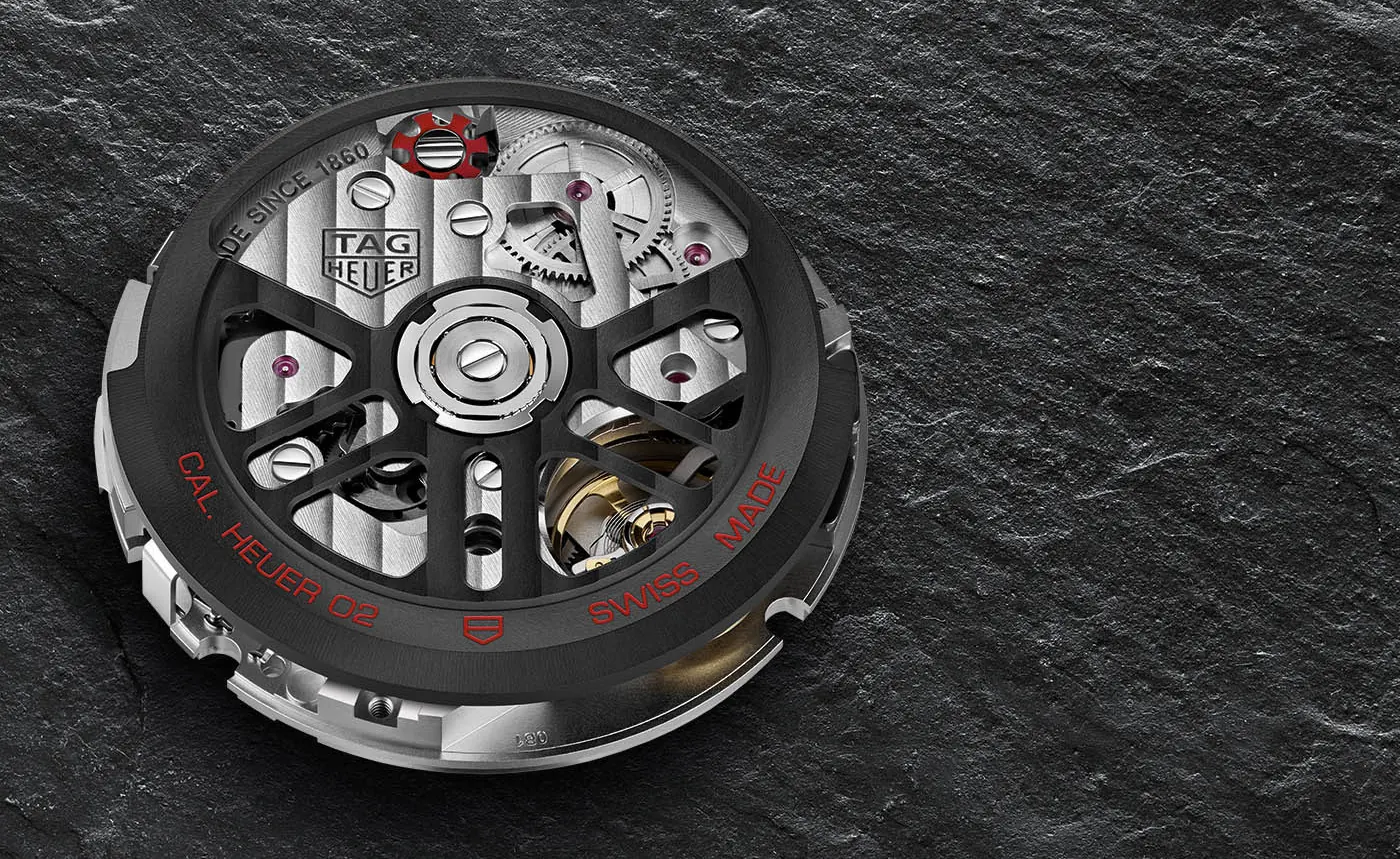
A mass-market example—in the best sense—of an accessible column-wheel chronograph in modern production.
Zenith Chronomaster Original
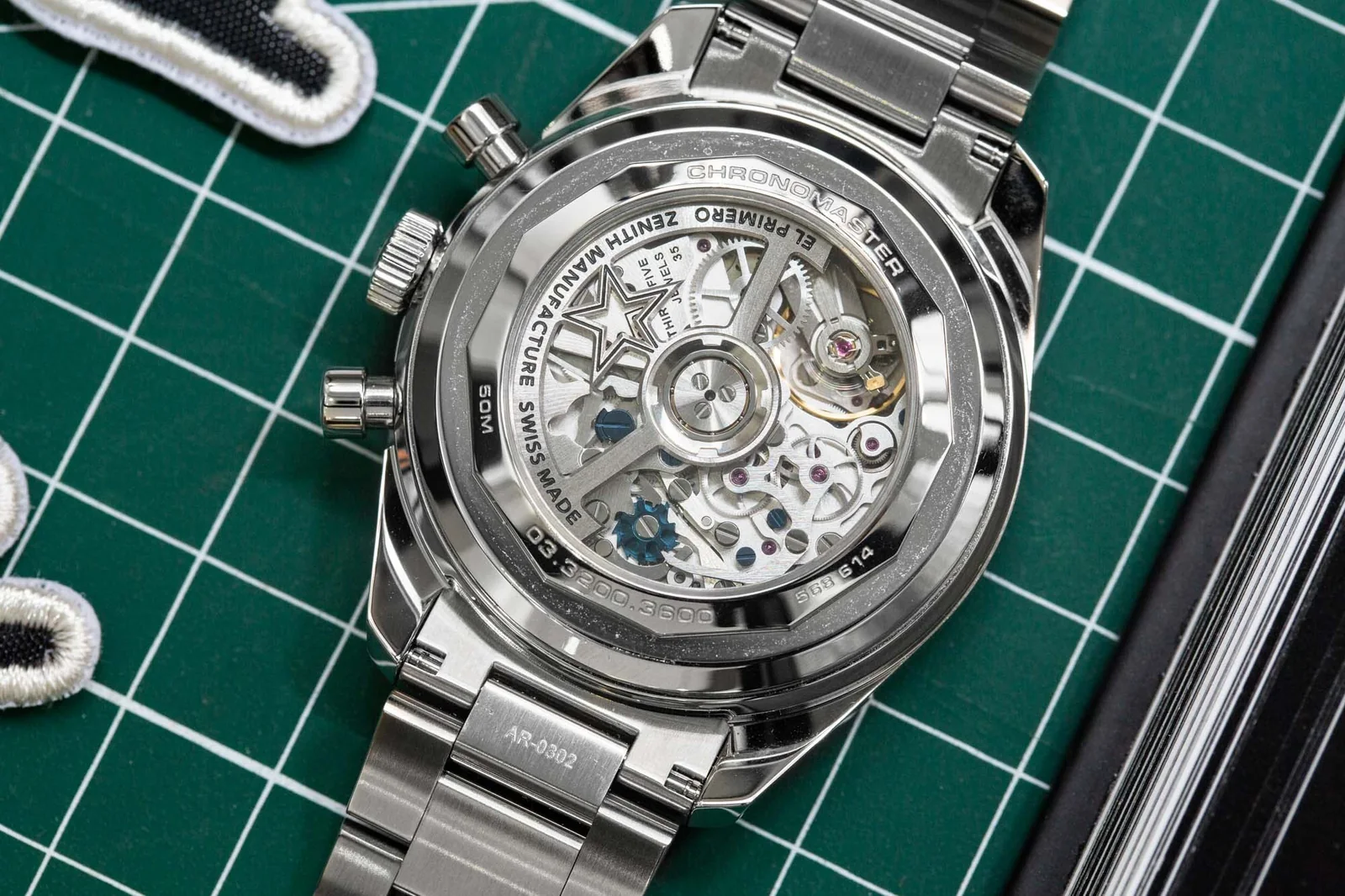
- Movement: El Primero 3600 (automatic), chronograph with column wheel
- Specificity: measures to 1/10th of a second via a central hand making one revolution in 10 seconds
A demonstration that the column wheel can be integrated into a high-frequency architecture and remain legible—snappy, alive, full of energy.
How to recognise a column wheel without opening the watch
You can’t be 100% certain without seeing the movement or reading the technical sheet. But there are clues:
- Pusher feel, often crisper and less “gritty”, even if it’s not proof.
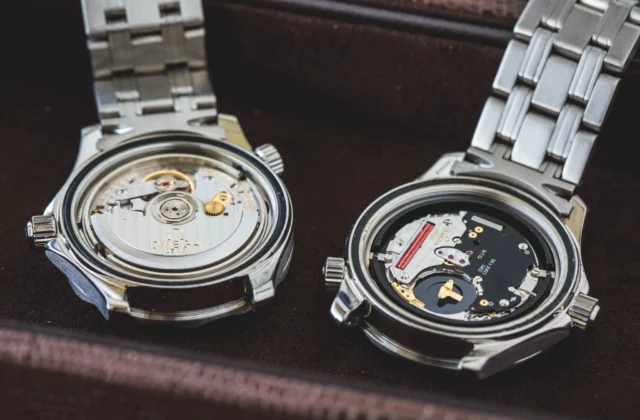
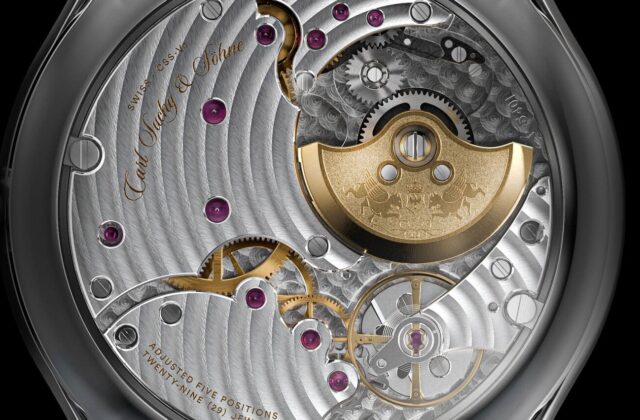
- An exhibition caseback: on some horizontal-clutch chronographs, you can spot a small “notched” wheel with columns.
- Documentation: brands are happy to mention it… sometimes like a talisman.
The most reliable indicator remains the calibre reference. A chronograph doesn’t lie—but a brochure can embellish.
Why collectors care, beyond snobbery
Because, at heart, the column wheel expresses an idea of watchmaking: control by mechanical sequencing—clean, hierarchical. It’s a detail that isn’t one. A chronograph is already a complication of control. And the column wheel is control of the control.
It isn’t mandatory for a good chronograph. But when it’s well designed, properly machined, polished where it needs to be, and adjusted without approximation, it gives the wearer a rare pleasure: feeling a material logic execute at the tip of a finger. A discreet luxury. Not fireworks.
Key takeaways
- A column-wheel chronograph uses a pillar wheel to coordinate start, stop and reset.
- The column wheel controls levers that manage the clutch, brake and reset hammers.
- It can work with a horizontal or vertical clutch; feel and behaviour depend heavily on that choice.
- The “nobility” comes chiefly from manufacturing and adjustment complexity, not from a myth.