Jeffrey Epstein’s Watches
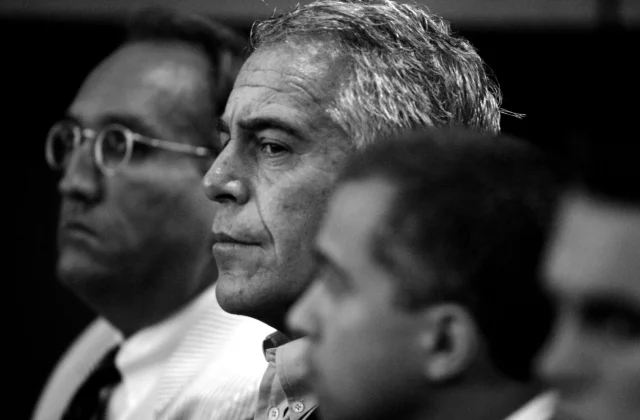
In the Who wears what? section, we have already looked at the watches worn by historical figures as controversial as Stalin, as well as the alleged watch of Adolf Hitler. Since you sometimes have to look for watchmaking where you least expect it, we might as well tackle another monster of our time today: Jeffrey Epstein.
While going through the “Epstein Files” made public by the United States Department of Justice (to each their hobbies), one image caught my eye. A photo taken during the raid on his private island, showing the inside of a drawer. Inside: several watches. That was enough to spark my curiosity: what watches did Jeffrey Epstein wear?
Because if the colossal fortune attributed to the man suggested a coherent, refined high-watchmaking collection, the reality on display is… let’s say, more bewildering.
The drawer photo: a telling snapshot
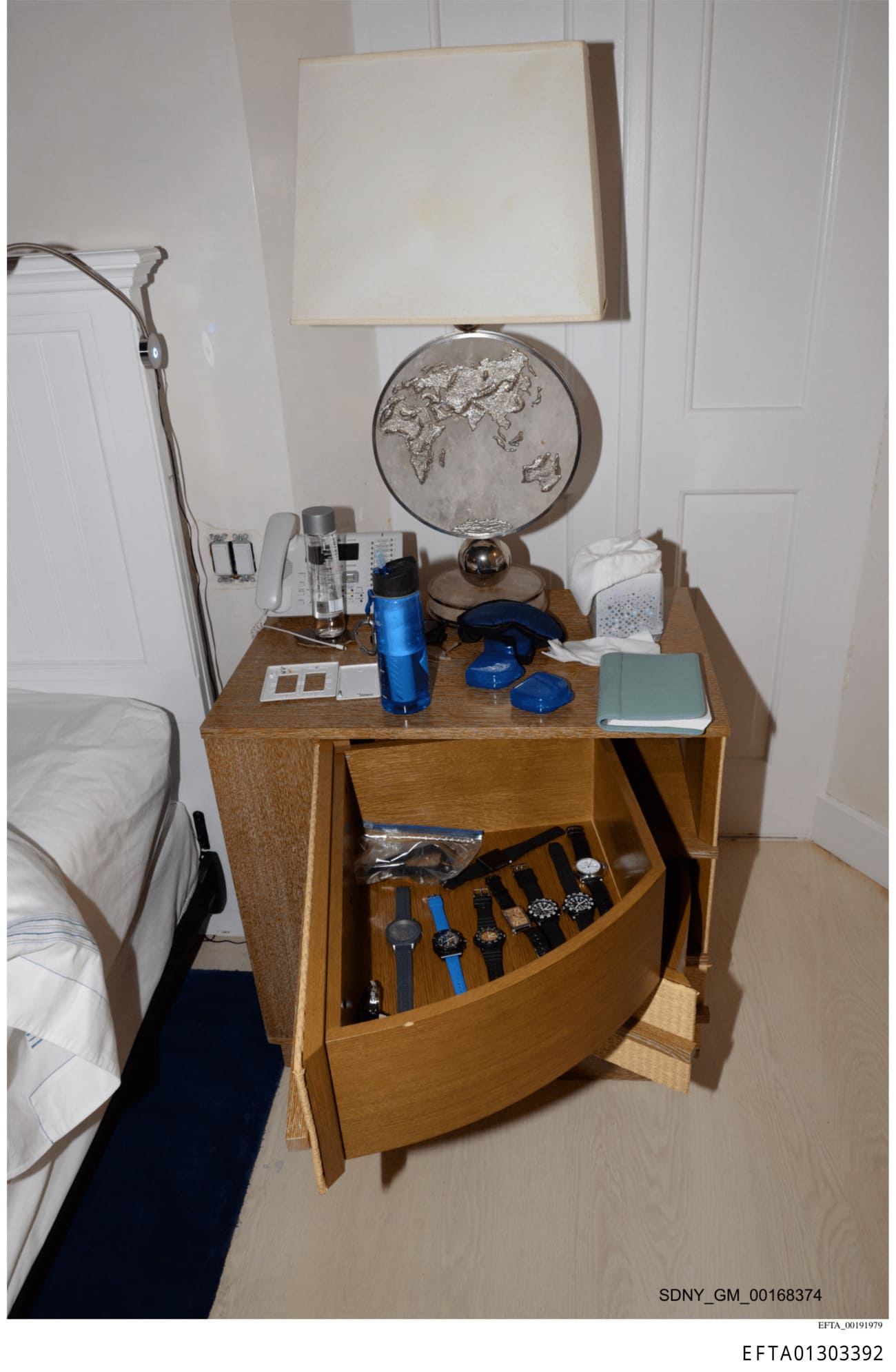
The photograph, taken by investigators on Epstein’s private island, shows a drawer in which several watches are stored. Nothing staged, nothing highlighted: simply timepieces placed there, without boxes, without any particular care.
What strikes you immediately is not so much the potential value of certain pieces as the total absence of any guiding thread. No considered collection, no horological through-line—just a heterogeneous accumulation of watches from radically different worlds.
What can be made out in the photo
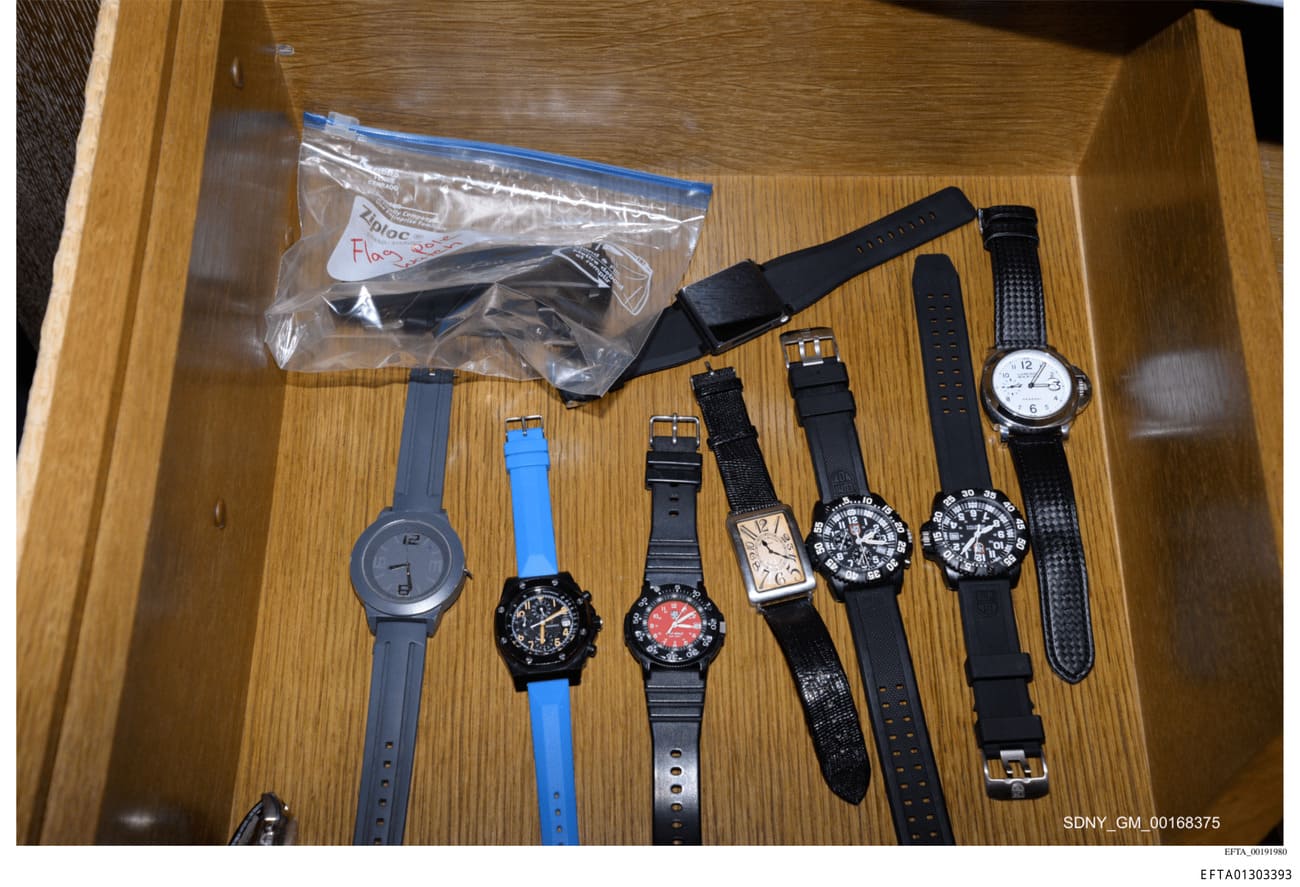
Among the visible pieces are several Luminox watches (notably the one with a red dial), more specifically references LU3015. Quartz watches, known for their tritium illumination and their very “tactical” positioning. The brand communicates heavily about its ties to the U.S. Navy SEALs.
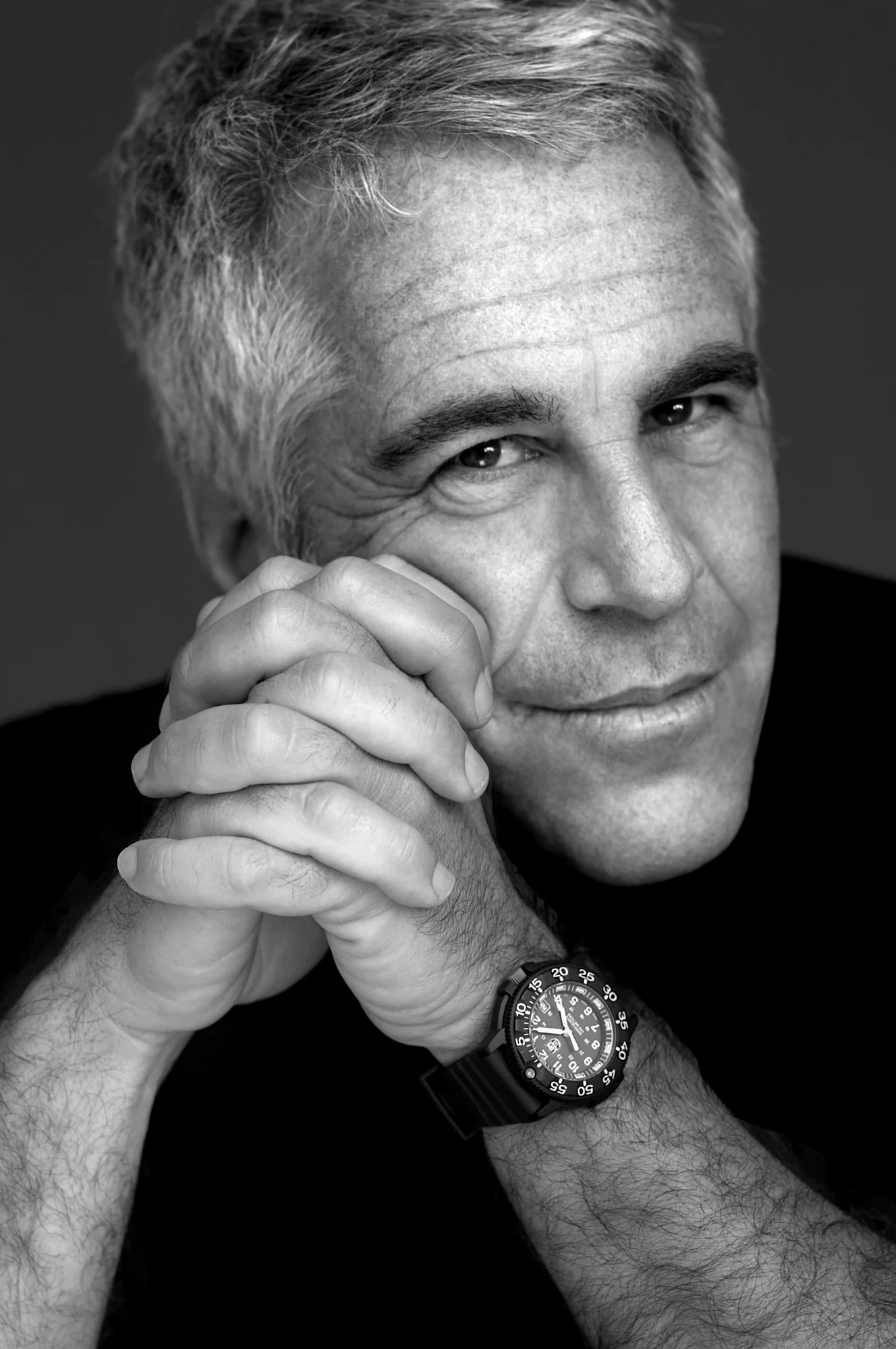
On paper, it’s a tough, functional watch, perfectly suited to military or outdoor use. In reality, it’s also an accessible watch, sold for under 300 euros. The disconnect between Luminox’s warrior storytelling and Epstein’s profile is striking. It almost feels like borrowed horological virility—a ready-made symbol bought off the shelf.
Panerai Luminor
On the right side of the drawer, you can also make out a Panerai Luminor, an iconic automatic watch from the Italian brand. Panerai is military aesthetics, hefty cases, the mythology of Italian naval commandos. An undeniably fine watch, but over time it has become an almost caricatural choice for anyone looking to project a certain “horological virility”.
Frank Muller Long Island
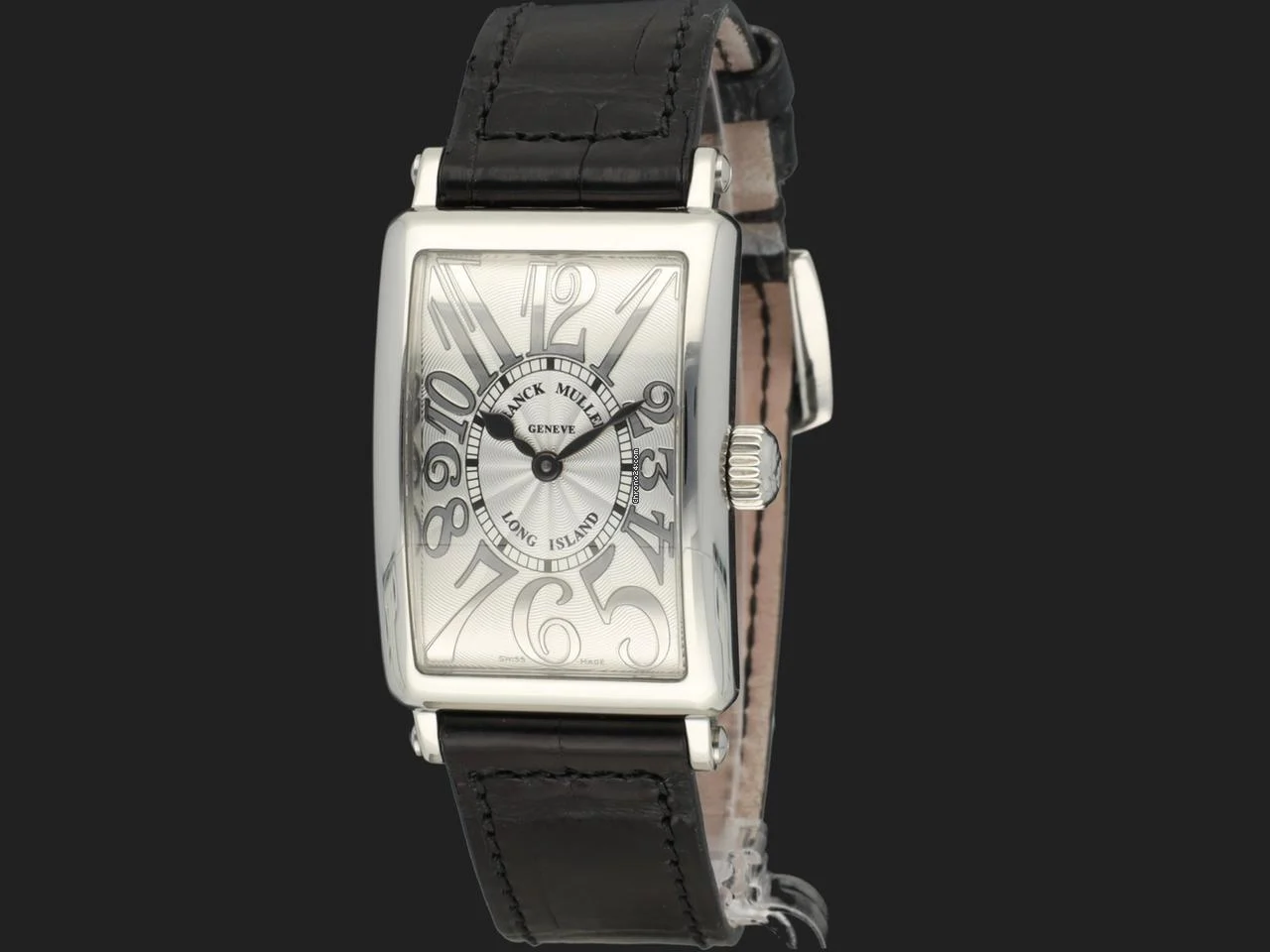
In the centre, a Frank Muller Long Island. A very “Art Deco” rectangular watch that stands as an icon for the brand.
What the emails reveal: when high watchmaking enters the picture
Going beyond this photo, and digging through the emails that were made public, I discovered other watches from Jeffrey Epstein’s watch collection.
In an exchange dating from 2011, his chief accountant, Richard Kahn, tries to draw up an inventory of Epstein’s valuable jewellery and watches for insurance purposes. This email, shown below, is an interesting source for understanding the true extent of his collection.
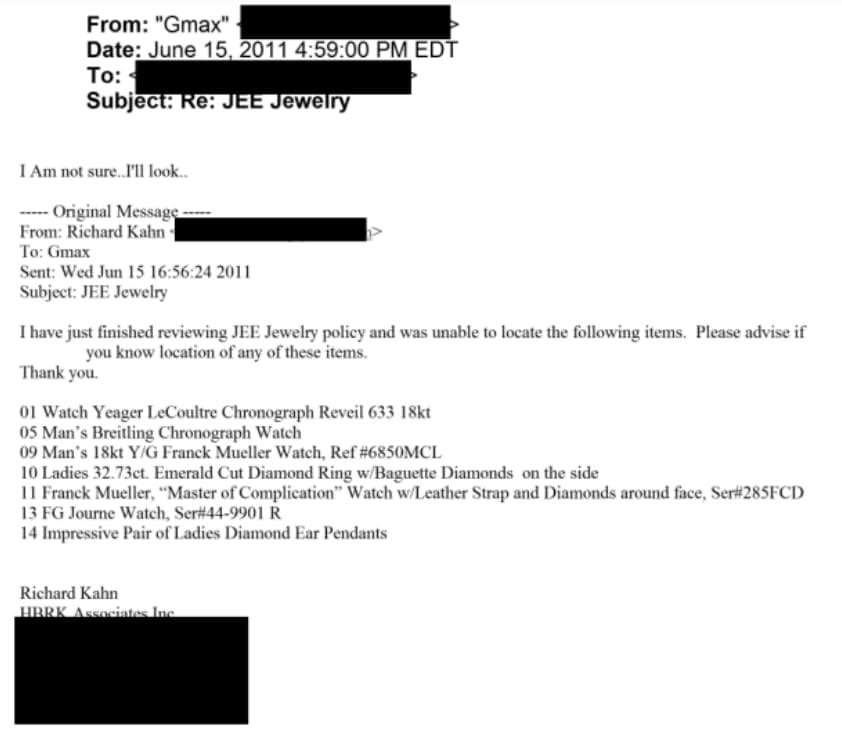
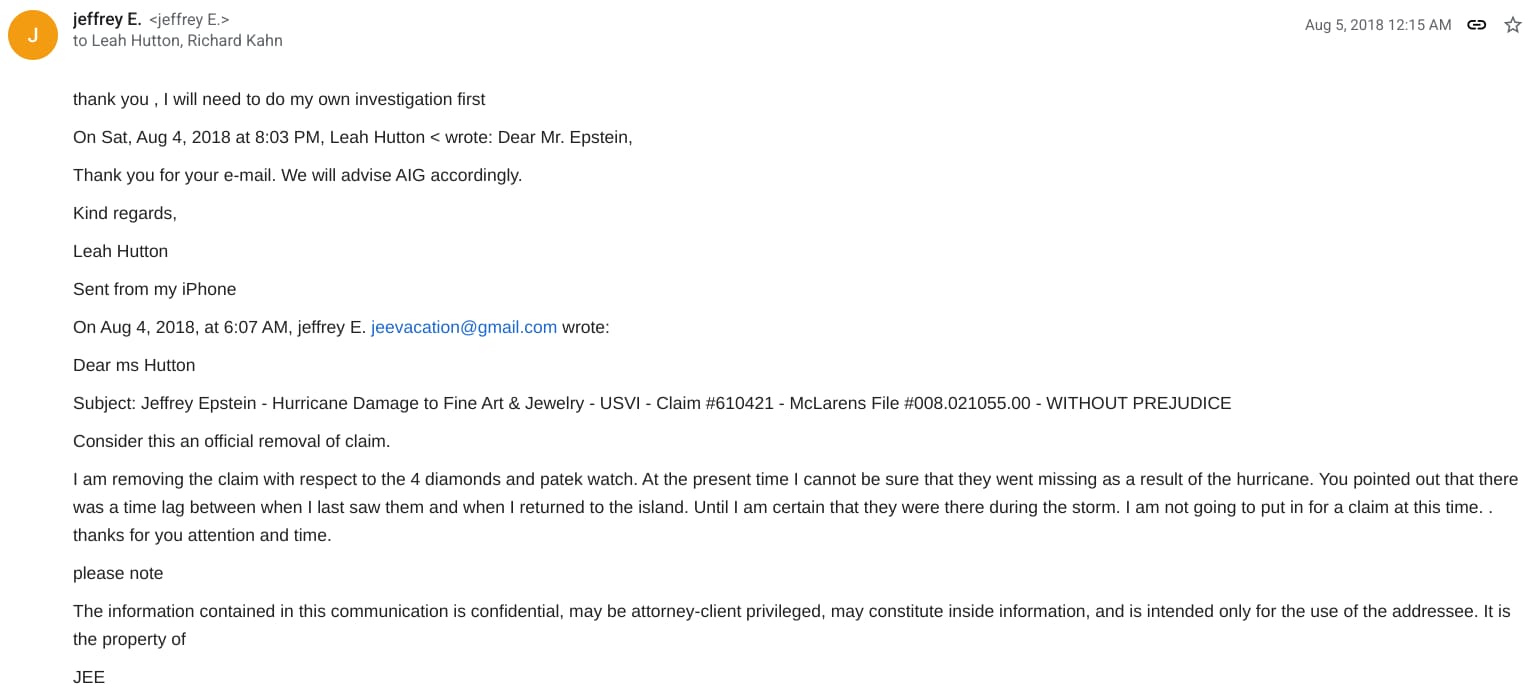
We also learn that Epstein owned at least one Patek Philippe, which he initially declared lost during a hurricane that hit his island in 2018, before withdrawing the reimbursement claim from his insurer (email below).
Another email exchange I pulled out offers a more mundane, yet just as revealing, insight into Epstein’s relationship with his watches: the pilot of his jet, Larry Visosti, writes to tell him he has found his black Hublot watch and will bring it back to him in the morning. A seemingly trivial detail, but one that confirms the existence of an additional piece in this disparate collection—and underlines, in passing, the almost utilitarian nature of these objects, even when they are luxury watches.

A likely inventory of Jeffrey Epstein’s watches
Based on the emails, public documents and available photos, we can draw up a non-exhaustive list of the watches he owned or may have owned:
Patek Philippe
Model unspecified. The ultimate symbol of Geneva high watchmaking, Patek Philippe embodies tradition, legacy and discreet luxury. It is unclear whether this piece genuinely formed part of a collector’s approach, or whether it was simply a status purchase.
Jaeger-LeCoultre Heraion
An interesting vintage watch, quartz movement, combining chronograph and alarm functions. The email refers to a “Yeager LeCoultre”, which tells you how little they cared…
Breitling chronograph
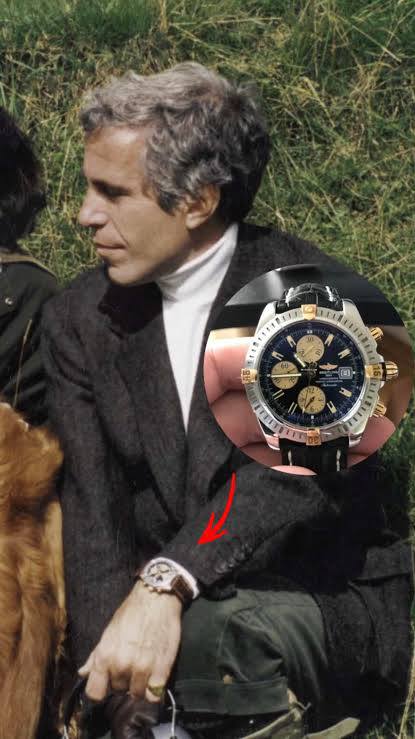
Breitling is instrument watchmaking, aviation, sport. Here again, a symbol more than a constructed horological approach.
Franck Muller Long Island
A piece with a recognisable Art Deco design, often chosen for its “statement” aesthetic. A watch that doesn’t leave anyone indifferent, but which, in this context, seems to reflect a taste for ostentation more than any real horological interest.
Franck Muller Master of Complications
Here we get into something more serious on a technical level. Franck Muller can produce very fine complications, sometimes spectacular. A respectable piece, even if the overall picture still lacks coherence.
F.P. Journe
This is undoubtedly a very interesting watch in the inventory. The reference is unknown, but F.P. Journe is an absolute benchmark in contemporary independent watchmaking. Owning such a piece suggests either a genuine interest in watchmaking—or a good adviser.
Vacheron Constantin Malte Dual Time Regulator

Probably the most refined watch of the lot. Beautiful, well designed, with a useful complication, it stands apart from the more “brutal” or gadget-like feel of some of the other pieces. A genuinely fine watch, without reservation.
A black Hublot
The existence of this watch is attested by an email exchange (mentioned above) in which Jeffrey Epstein’s personal pilot, Larry Visosti, tells him he has found his black Hublot and is about to return it to him. Once again, this is less about collecting than about a luxury accessory—worn, misplaced, then recovered—without it seeming to carry any particular importance for its owner.
Fortune, power, and bad horological taste
What emerges from this inventory is not the absence of fine watches, but the absence of coherence. This constant split gives the impression of accumulation rather than collection.
Watchmaking, like many luxury worlds, rests on codes, history and sensibility. Owning a fine watch says nothing, in itself, about one’s ability to appreciate what it truly represents.
With Epstein, everything suggests that watches were above all objects: symbols of power, social markers, sometimes even simple accessories. Nothing indicates the approach of an informed collector or a true enthusiast.