Why Do Some Watches “Vibrate” on the Wrist?

When a watch “lives” on the wrist
A slight shiver, a secret rustle, sometimes a genuine buzz that seems to travel through the case. Anyone who wears mechanical watches has already felt that intimate moment when the object appears to answer your movement. Where does that “vibration” on the wrist come from? Behind the sensation lie stories of free-spinning rotors, cult mechanical alarms, and even old singing technologies. So many chapters that say something about our sensory relationship with the measurement of time.
The most common cause: an automatic’s rotor
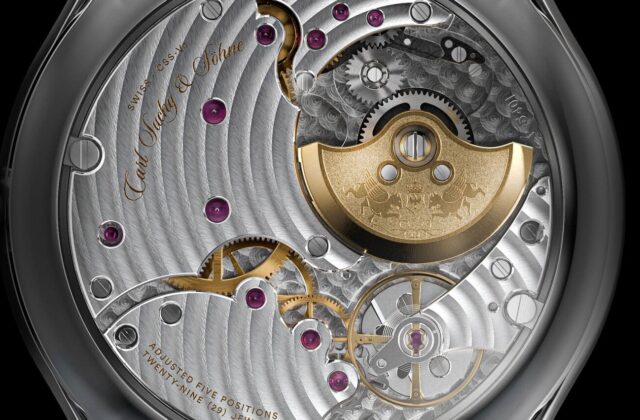
In the vast majority of cases, the vibrating sensation comes from the automatic winding system. At the heart of the watch, a semi-circular metal disc—the rotor—pivots with your movements and winds the mainspring. Depending on the architecture, this rotor winds in one direction (unidirectional) and “freewheels” in the other. When it starts spinning at full speed, released from the clutch, the case trembles and the wearer feels that famous “wobble.”
Enthusiasts know the phenomenon well on chronographs powered by the Valjoux 7750 (say “seventy-seven fifty” if you want to sound in the know). Its tactile signature—that brief jolt when you suddenly raise your arm—has become almost an initiation rite, nicknamed the “helicopter effect.” Nothing to worry about here: it’s the mechanics dancing.
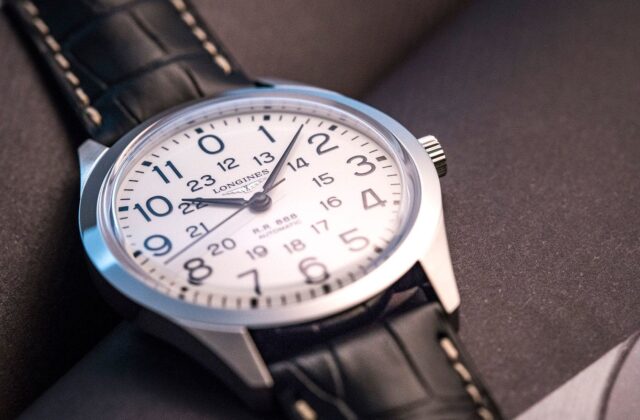
Older still, the “bumper” automatics of the 1940s and ’50s—Omega and Longines leading the way—didn’t have a 360° rotor, but rather a weight that would bump against springs. With each controlled impact, a little tap on the wrist: a deliciously retro sensation that collectors still seek out.
- Brief, random vibration while moving: often a unidirectional rotor racing in freewheel mode.
- More pronounced jolt on certain chronos: a typical signature of specific calibre families (e.g. 7750).
- A faint buzz when you shake the watch: a very free ball-bearing rotor—normal as long as there’s no metallic rubbing noise.
When the alarm makes itself felt: Cricket and Memovox
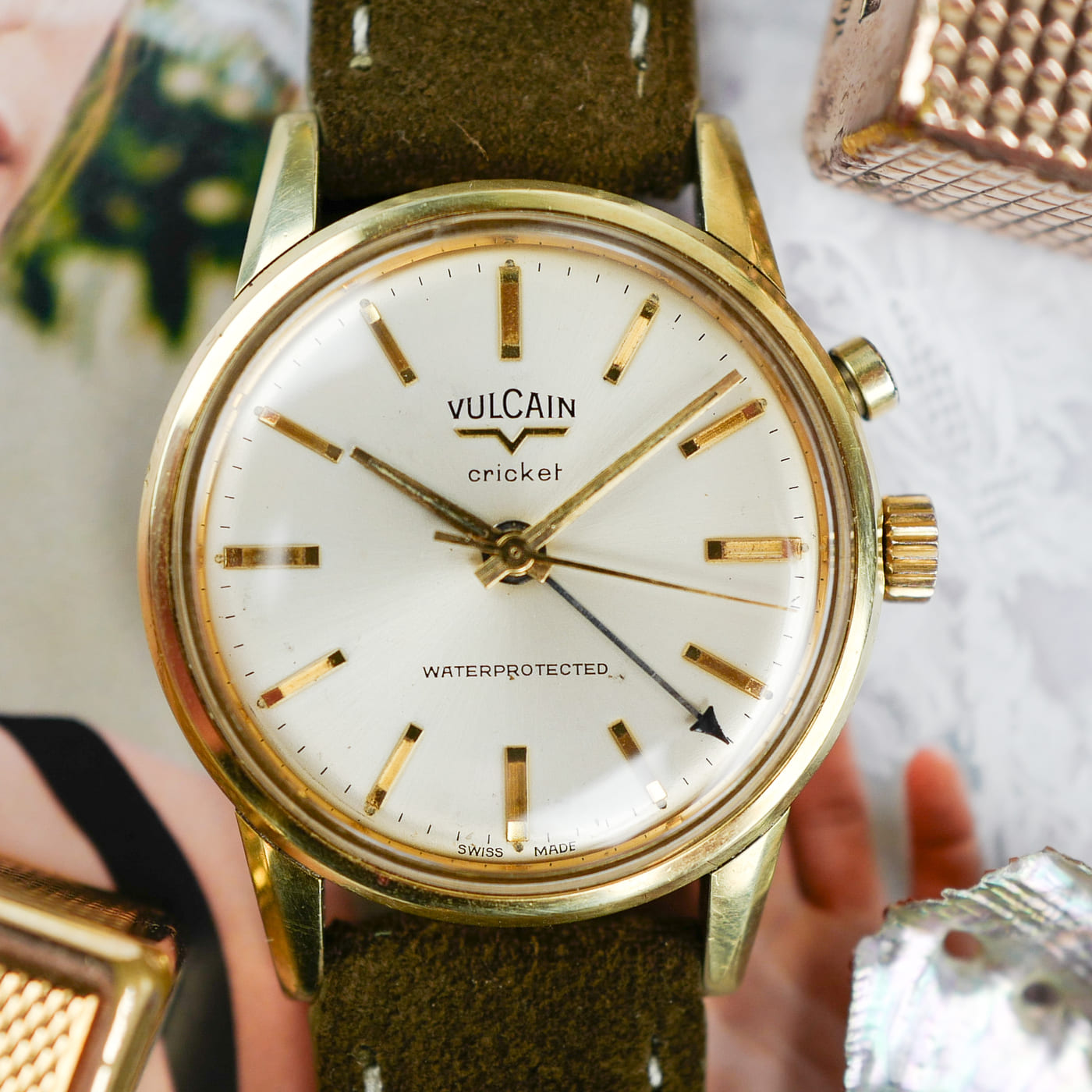
Another source—this one intentional—is the mechanical alarm. Vulcain built its legend with the Cricket, nicknamed “The President’s Watch” after winning over the wrists of several American presidents. At the set time, a hammer strikes a membrane or resonating component. The result: a chime that vibrates distinctly against the skin, with an insect-like timbre—nervy and charming.
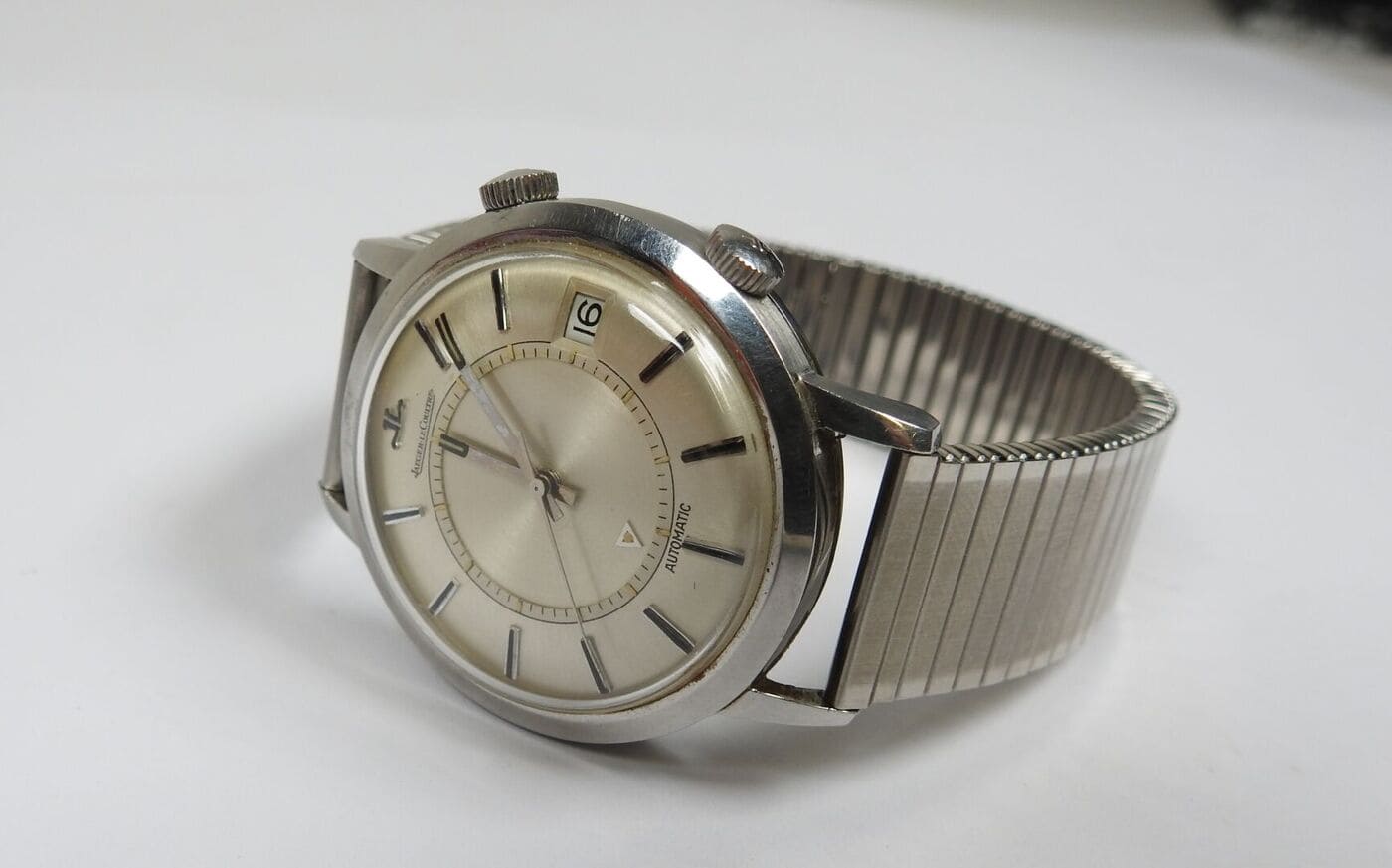
At Jaeger-LeCoultre, the Memovox brought the wake-up call to the wrist with inimitable acoustic refinement, all the way to the mythical 1968 Polaris, which combined an alarm with a diving vocation. These watches don’t merely alert you: they speak to you—physically—through a sustained micro-vibration that travels through the case and bracelet.
- Continuous vibration for 10 to 20 seconds: typical of an activated mechanical alarm.
- “Cricket” sound or a clear metallic buzz: normal for these historic complications.
- A more diffuse sensation on leather, more present on steel: the material transmits resonance differently.
What you can hear… and what you won’t feel
The vocabulary of watch vibrations has its false friends. Tuning-fork watches—like the Bulova Accutron of the sixties, regulated at 360 Hz—emit a gentle, signature hum that’s almost musical. You can hear it close to the ear; you rarely feel it on the wrist. Likewise, a “high-beat” calibre at 36,000 vibrations per hour crackles to the trained ear without vibrating the skin. Conversely, smartwatches use a dedicated haptic motor: here, the vibration is purely utilitarian, designed for notifications, not for mechanical poetry.
Should you worry? Warning signs
Most vibrations are benign and part of the charm. But a few symptoms should put you on alert. A rotor should neither scrape nor “grate.” A continuous metallic rubbing noise, abnormally strong vibrations with every movement, or a loss of power reserve can point to a worn rotor axle, a tired ball bearing, or even a loose screw wandering inside the case. Another common red herring: a poorly adjusted bracelet. A hollow link or an end-link that isn’t properly seated can mimic a movement vibration.
- A rasping sound or circular rubbing: possible rotor-to-caseback contact—urgent service.
- Systematic jolts with every gesture and reduced performance: check the winding system.
- Repeated sharp clicking without rotor movement: check screws and the oscillating weight.
- Nothing abnormal in the movement, but tinkling on the wrist: adjust the bracelet, change the end-links.
A useful reminder: a magnetised movement does not cause a perceptible vibration; it mainly affects accuracy. If in doubt, a watchmaker can confirm it in a few minutes with a demagnetiser.
Choosing the “feel” that suits you
Like the sound of a car door, a watch’s feel is part of its identity. If you like to feel the mechanics come alive, look for:
- Automatics with unidirectional winding known for being expressive (certain 7750-based chronos, many productions from the 1990s–2000s).
- Vintage “bumpers” for a heritage tactile experience.
- Alarm watches: Vulcain Cricket, Jaeger-LeCoultre Memovox, or certain more under-the-radar Polerouter/Sub alarm models.
If you prefer discretion:
- Opt for bidirectional winding systems, generally more subdued (many modern calibres from Rolex, Omega, Grand Seiko).
- Look to micro-rotors, often very fluid (Bulgari Octo Finissimo, certain Piaget, Laurent Ferrier).
- Choose a thick leather strap, which dampens transmission more effectively.
The extra soul
A watch that “vibrates” reminds you that time isn’t just a digital datum: it’s a rhythm, an exchange. The rotor that races at the turn of a gesture, the alarm that purrs on a café table, the faint hum of an Accutron under a cuff… So many micro-events that signal a presence. Feeling your watch is also listening to it—and, when needed, knowing how to tell the poetry of a well-born alarm from the signal that service is due. Between the two lies everything that makes watch culture: an art of detail, movement legends, and that discreet pleasure you wear close to yourself.