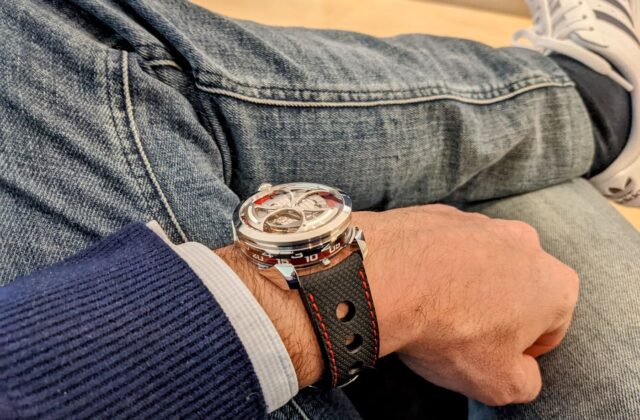
NATO Straps Make a Big Comeback
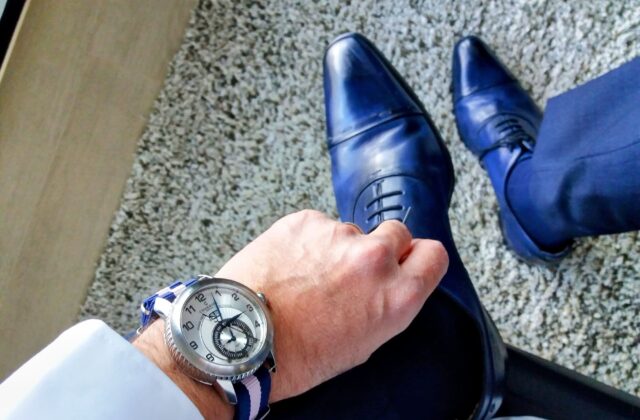
Why the NATO Strap Is Making a Strong Comeback
Some accessories move through the decades without ever losing their relevance. The NATO strap belongs to that functional elite. Its return is unapologetic, driven by a generation asking for durability, comfort, and a style that actually says something. Between military heritage, effortless chic, and total modularity, the NATO is once again on everyone’s wrist.
From the Barracks to the Office
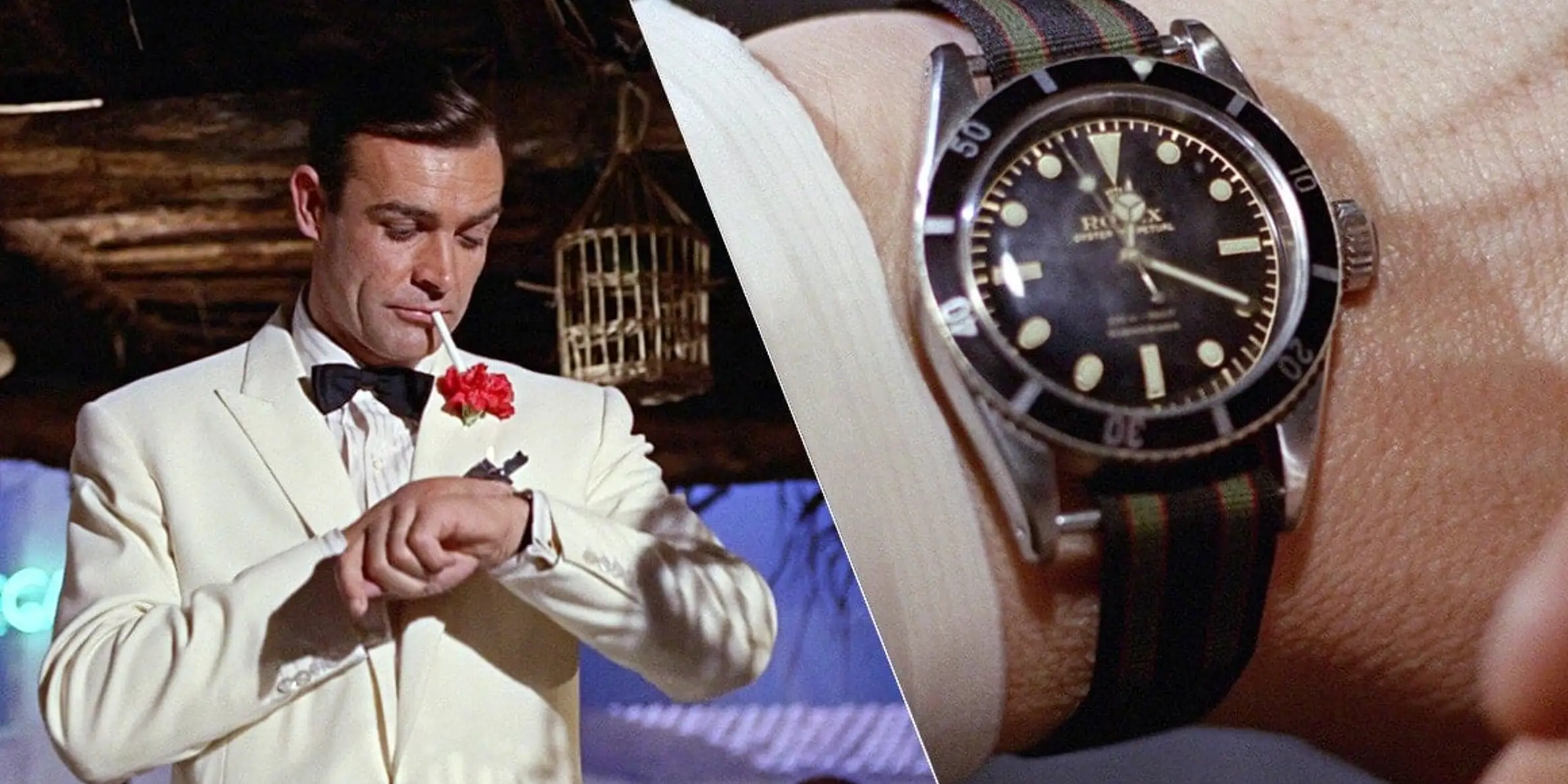
The NATO officially appears in 1973, within the specifications of the British Ministry of Defence (Def Stan 66-15). A tough nylon strap in “Admiralty Grey”, designed to withstand salt water, sweat, and snags. Its single-piece pass-through construction keeps the watch secure even if a spring bar fails. Soldiers requested it via a G10 form—hence the nickname. A few years earlier, James Bond was already wearing a Submariner on a striped nylon strap in Goldfinger, an image that would forever cement the idea of the gentleman-adventurer’s watch fastened to a ready-for-anything textile, underscoring its military heritage.
The Return of Quiet Luxury
Why is the trend accelerating? Because the NATO ticks every box contemporary style demands: instant modularity, year-round comfort, utilitarian-chic spirit, and an eco-aware mindset that favours recycled materials. The major brands have understood it—from sport-chic houses to field-watch specialists. One strap becomes a wardrobe in itself, and each colour tells a mood. Luxury is no longer only metallic; it can be woven, too.
NATO Trends to Watch
Colours and Patterns
- Textured neutrals: sand, taupe, pebble grey—easy to pair, perfect with brushed steel and a black dial.
- Sage green and deep khaki: a military nod, more sophisticated than basic “army” green.
- Reimagined regimental stripes: navy/sand, burgundy/charcoal, or the famous “Bond” pattern updated with balanced stripe widths.
- Mineral blues: petrol blue and midnight blue to add depth to dive watches.
- Measured bright accents: a mandarin or lemon edge on a dark base, to energise without shouting.
Materials and Finishes
- “Seatbelt” nylon: tight weave, soft hand, elegant drape. More premium, more comfortable on the wrist.
- Recycled nylon and upcycled fishing nets: the responsible dimension is becoming a central selling point.
- Single-pass: reduces wrist height, ideal for thick cases.
- Hardware options: brushed steel for the tool vibe, black PVD for stealth, titanium for ultra-light wear.
- Tonal or contrasting stitching: a detail that elevates the strap without changing its character.
Details That Change Everything
- Quick-release spring bars: swap straps in ten seconds, no tools required.
- Low-profile buckles: slimmer, they slide under a shirt cuff.
- Heat-sealed edges and reinforced holes: goodbye premature fraying.
Which Watches and Outfits to Wear It With
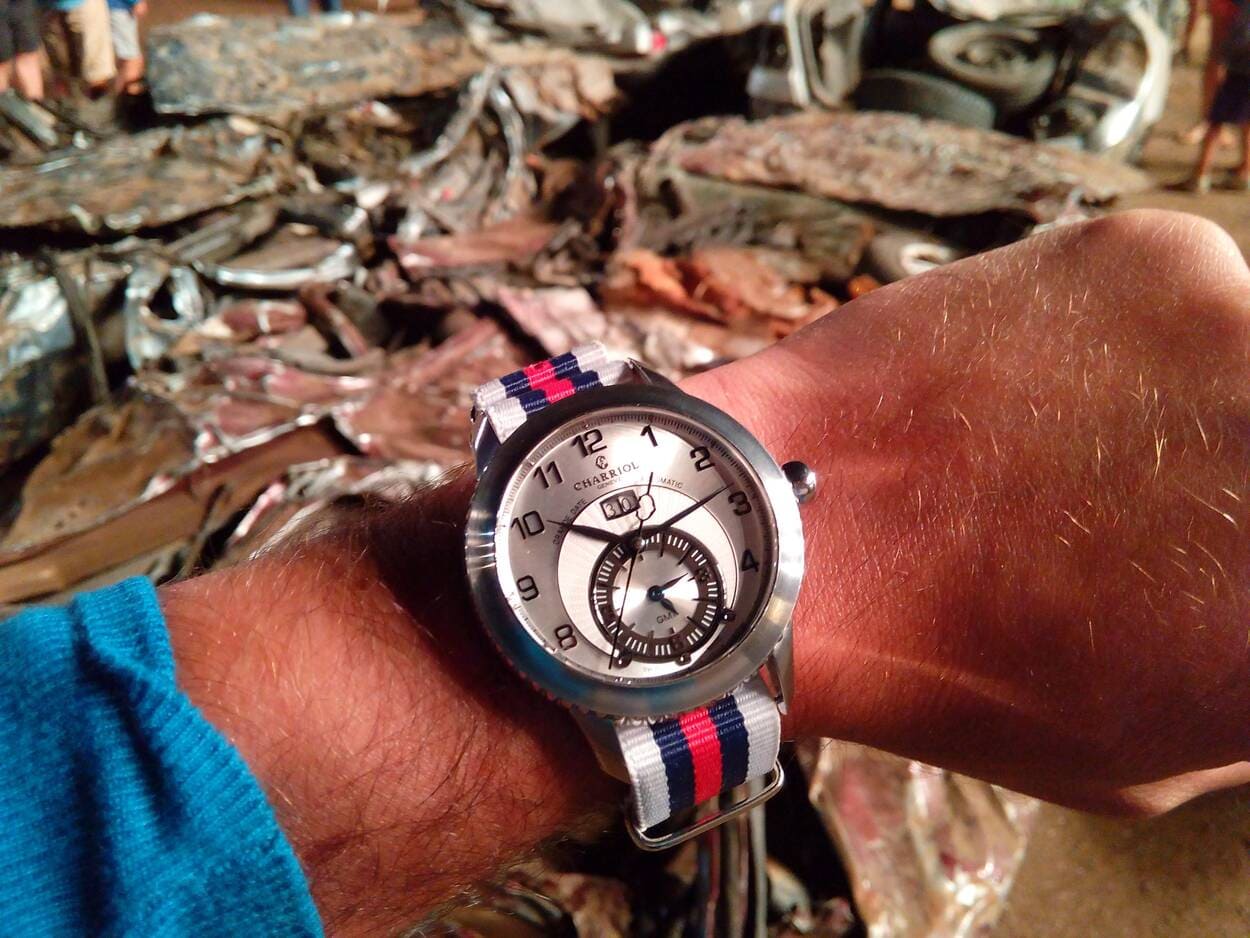
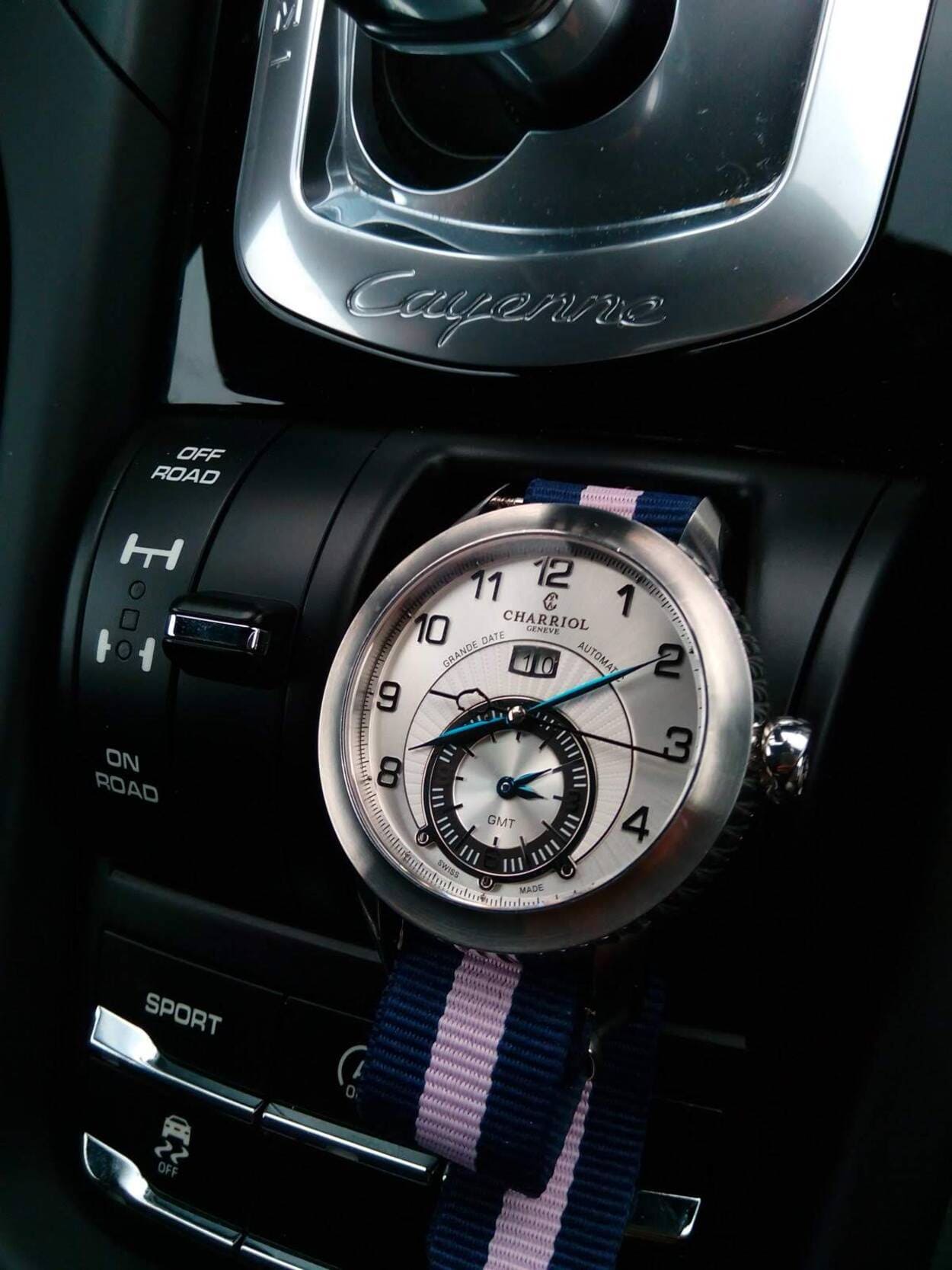
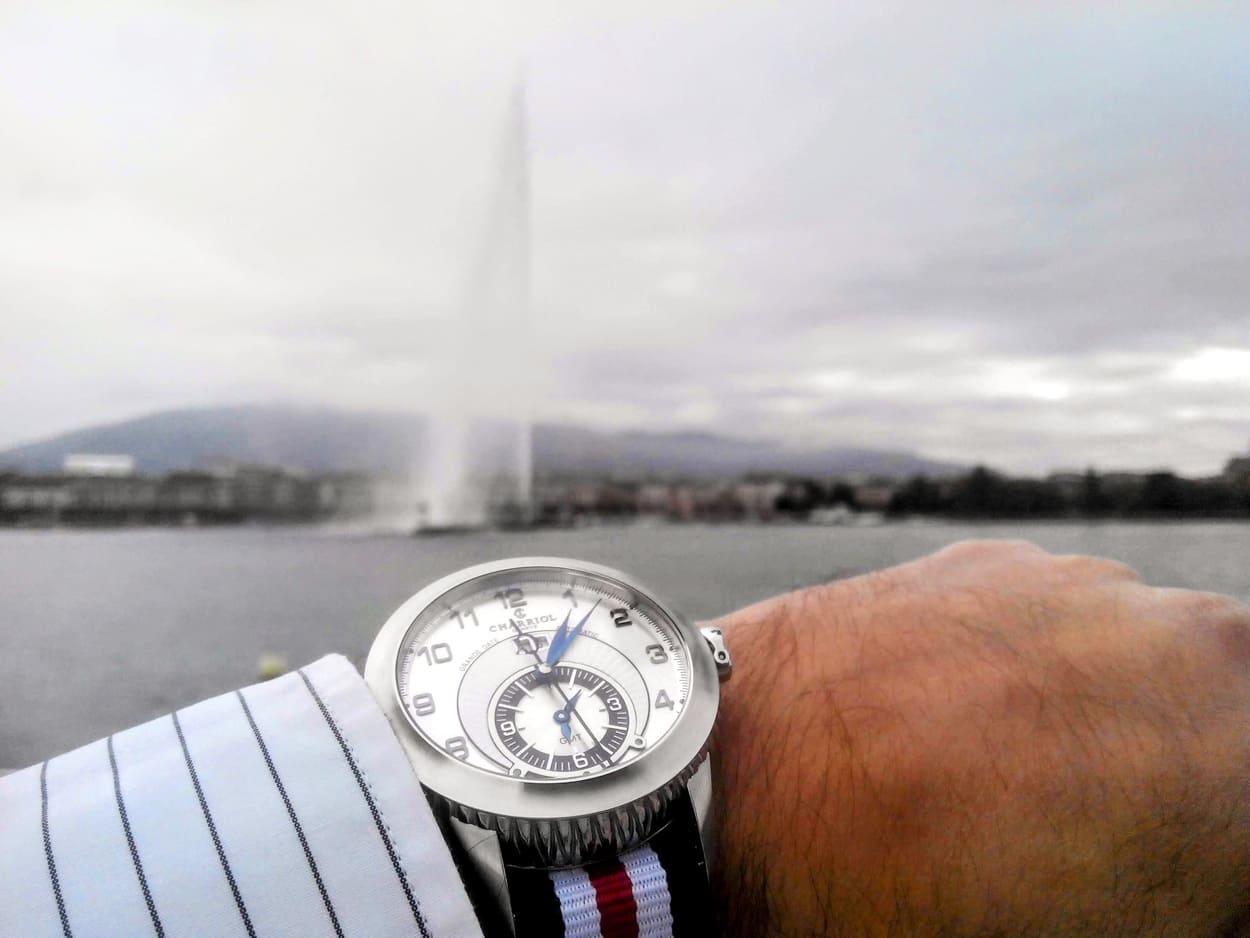
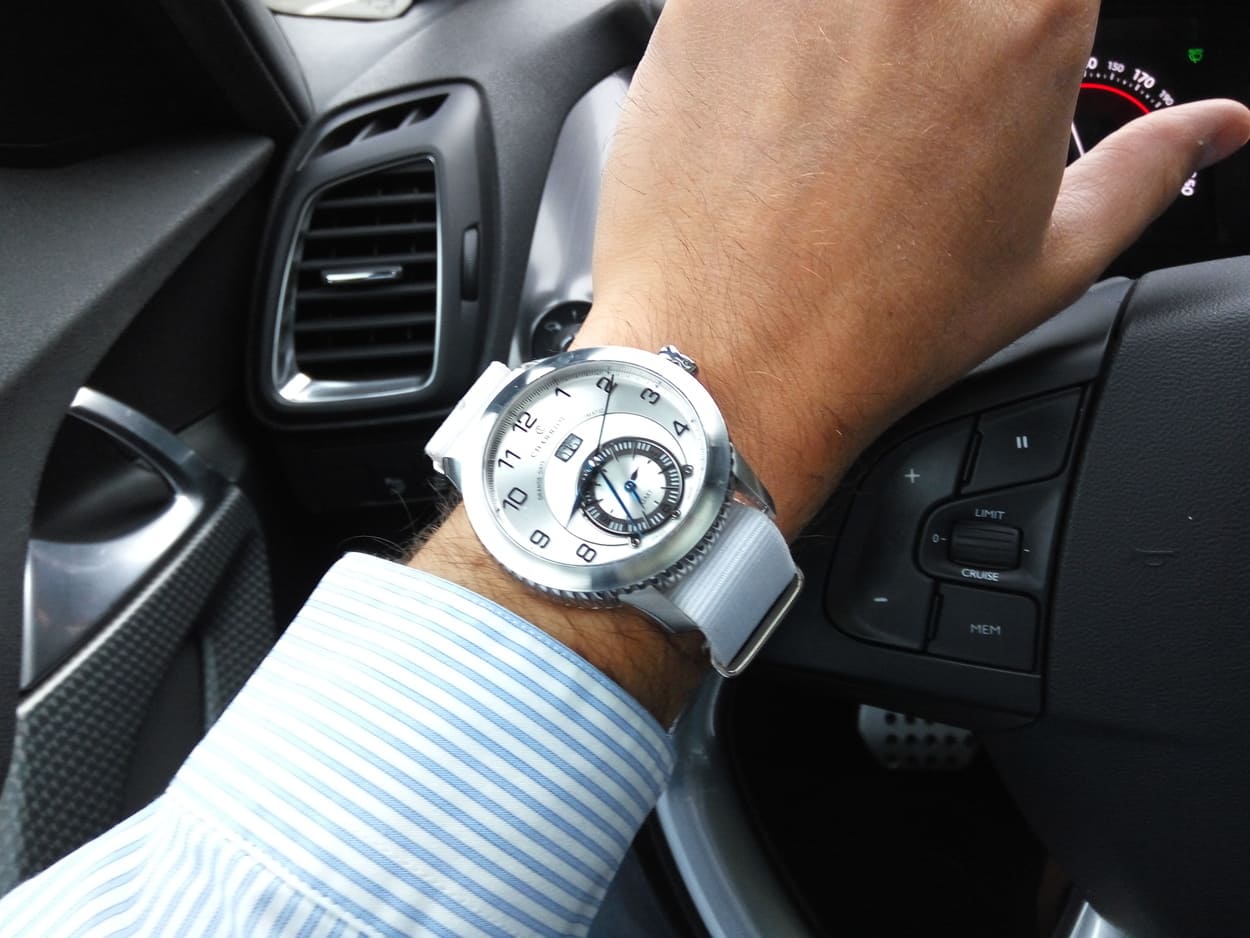
The NATO has become a universal language. It speaks “field” with a tool watch, adds a summer breeze to a diver, and lightens a vintage piece without betraying it. What matters is the harmony of tones and textures—the subtle conversation between dial, bezel, and weave.
Three Winning Pairings
- Steel diver + midnight-blue seatbelt: instant nautical elegance, from office to terrace.
- Sand field watch + sage-khaki single-pass: military DNA in a city-chic register.
- Vintage panda chronograph + burgundy/charcoal stripes: a sophisticated twist that wakes up the dial.
As for your wardrobe, think materials. A textured NATO pairs beautifully with Japanese denim, Oxford cotton, or merino knitwear. In summer, linen and woven nylon share the same lightness. In winter, black PVD and anthracite grey play well with a navy peacoat or a brushed wool overcoat. The idea isn’t to match strictly, but to create continuity in tone.
Choosing and Caring for Your Strap
The Quick Guide
- Width: 18, 20, or 22 mm for the vast majority of watches. Choose the exact lug width.
- Thickness: a thick seatbelt nylon feels luxurious but can raise the watch; a single-pass slims the profile.
- Length: standard for 15.5–19 cm wrists; “long” if you like the military fold-over or wear it over a sleeve.
- Hardware: brushed if your case is brushed; polished on a dress watch; titanium on a lightweight piece.
- Colour: let the dial speak. Black, blue, and grey are foolproof; dare burgundy with a cream dial, sand with a black bezel.
- Compatibility: avoid on cases with integrated lugs. Check clearance under the watch if the lugs are very short.
Care
- Rinse in lukewarm water after the sea or sport, then dry flat in the shade.
- Machine-wash in a mesh bag (gentle cycle) once a month if worn intensively.
- Rotation: alternate two or three straps to extend lifespan and prevent odours.
- Inspection: regularly check spring bars and friction points near the keepers.
Where to Buy and How Much to Spend
The spectrum is wide—and that’s good news. Entry-level options start around €15–25 (that said, I bought my first straps on AliExpress or eBay for under €3), perfect for exploring colours. Between €30 and €60, you get denser weaves, better-finished buckles, and more refined edges. Beyond that (€70–150), premium seatbelt NATOs—sometimes in recycled nylon—offer exemplary drape and impeccable 316L steel or titanium hardware. Brands often offer their own straps matched to their collections, while independent specialists compete on quality and palette.
An insider tip: favour makers who truly master the weaving and the finishing of the keepers. The feel on the wrist, the way the strap slides through the lugs and holds its curve—this is where everything is decided. And if your watch has value, whether sentimental or financial, don’t hesitate to fit reinforced spring bars or double-shoulder spring bars.
The NATO Spirit
Adopting a NATO strap isn’t simply “changing a band”. It’s giving your watch a new voice—sometimes bolder, sometimes more understated—without betraying its design. In 2025, the trend isn’t just a fashion moment: it extends a culture of beautiful tools, of design that serves use, of elegance that lives outdoors. A watch on a NATO tells your pace: an early swim, back-to-back meetings, an improvised weekend. It welcomes patina, accepts the rain, gets washed, and goes again. And when the mood strikes, it changes colour as quickly as you change tempo.
The great NATO comeback, then, is no surprise: it’s the natural consequence of an era that wants meaning without giving up style. Between heritage and modernity, the NATO strap becomes again what it has never stopped being for enthusiasts: an essential.