Why Bronze Watches Age So Well
The allure of a living metal
Some materials command respect through their austerity; bronze, by contrast, inspires desire through its vitality. On a watch, this ancient metal doesn’t merely shine: it changes, darkens, takes on nuance, and tells the story of time passing. Its patina—never quite the same—turns every piece into something singular. That is why bronze watches age so beautifully: they own what they are, they dress themselves in an elegance that is anything but fixed, and they reveal the personality of the person wearing them.
From the sea to the wrist: bronze as an inheritance
The romance begins on ship decks. Bronze fitted portholes, compasses and early marine chronometers, chosen for its resistance to salt and its long-term stability. A historical nod that now infuses watchmaking with a whiff of adventure: wearing a bronze watch is to summon the imagination of exploration, the echo of shipyards, and the ingenuity of naval engineers. This lineage also explains its aesthetic: a chromatic warmth somewhere between honey and cinnamon, set against the coolness of steel and the flashiness of gold.
Patina: science and emotion
Patina is not a simple “vintage effect”. It is a chemical phenomenon: surface oxidation creates a thin protective layer—copper oxides and carbonates—that isolates the metal and protects it. Depending on the alloy (tin-rich CuSn8, aluminium bronze, or phosphor bronze), the patina can lean towards chocolate brown, tobacco, or even khaki highlights. Climate, skin pH, humidity, sea spray, the strap leather or city dust: everything plays a part. The emotion comes from that intimate complicity between the watch and its owner; two pieces identical on paper quickly diverge to the eye, like two slices of life.
For those who prefer titanium, we discuss it here, or here, and even there.
Why they age so well
- Protective beauty: patina is a natural shield that limits visual wear and tells the story of use rather than erasing it.
- Warmth that deepens: bronze gains depth, from the first amber glints to enveloping browns that flatter every skin tone.
- Singularity, owned: patina signs the object; it makes each watch unique without artifice or heavy customisation.
- A dialogue with design: cream indices, green dials, sunlit blues or patinated blacks gain contrast over time.
- A credible alternative: against ubiquitous steel and technical titanium, bronze offers a warm, durable, audacious elegance.
- In praise of marks: micro-knocks and rubs integrate and blend in, creating visual continuity rather than an inventory of flaws.
From trend to icon
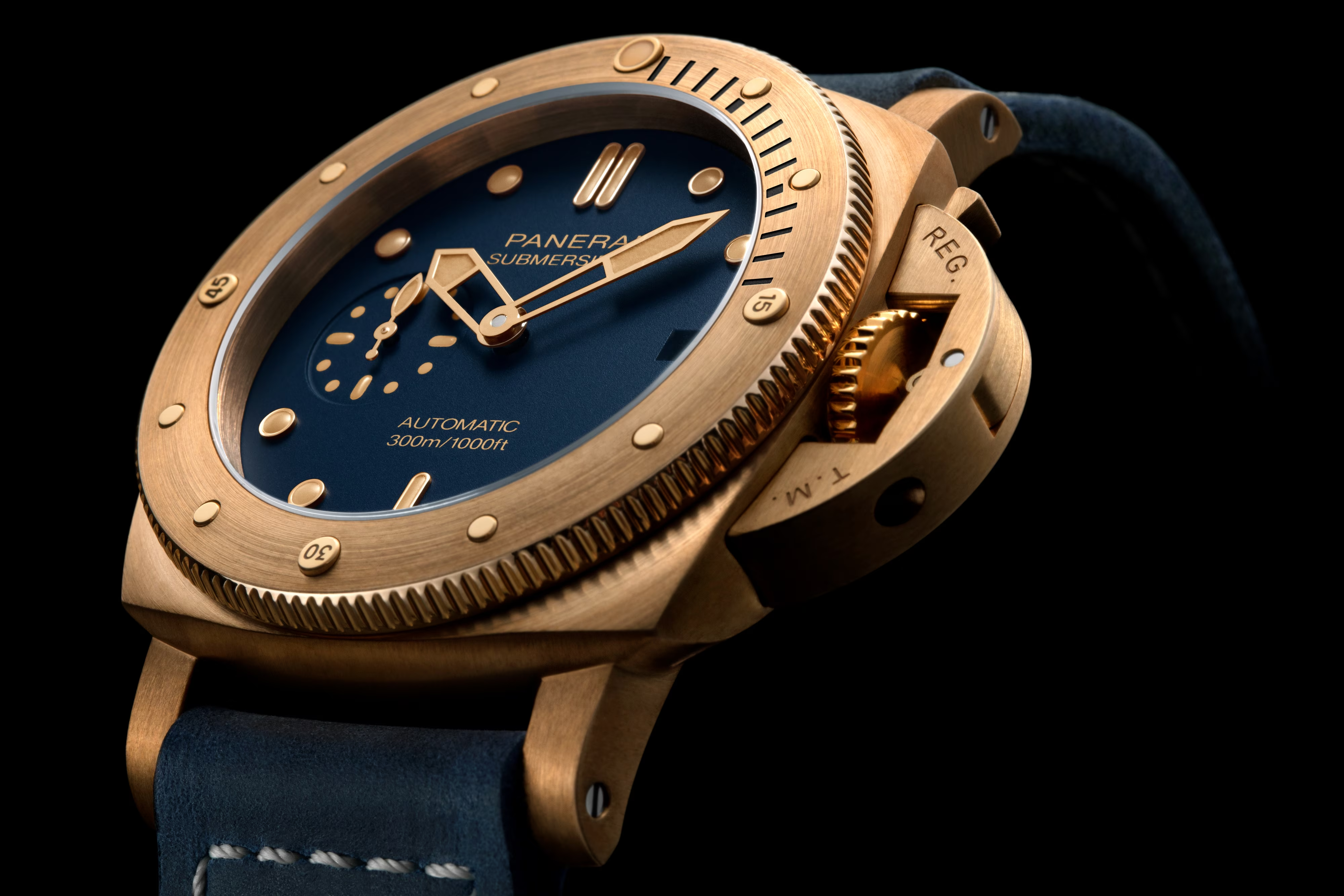
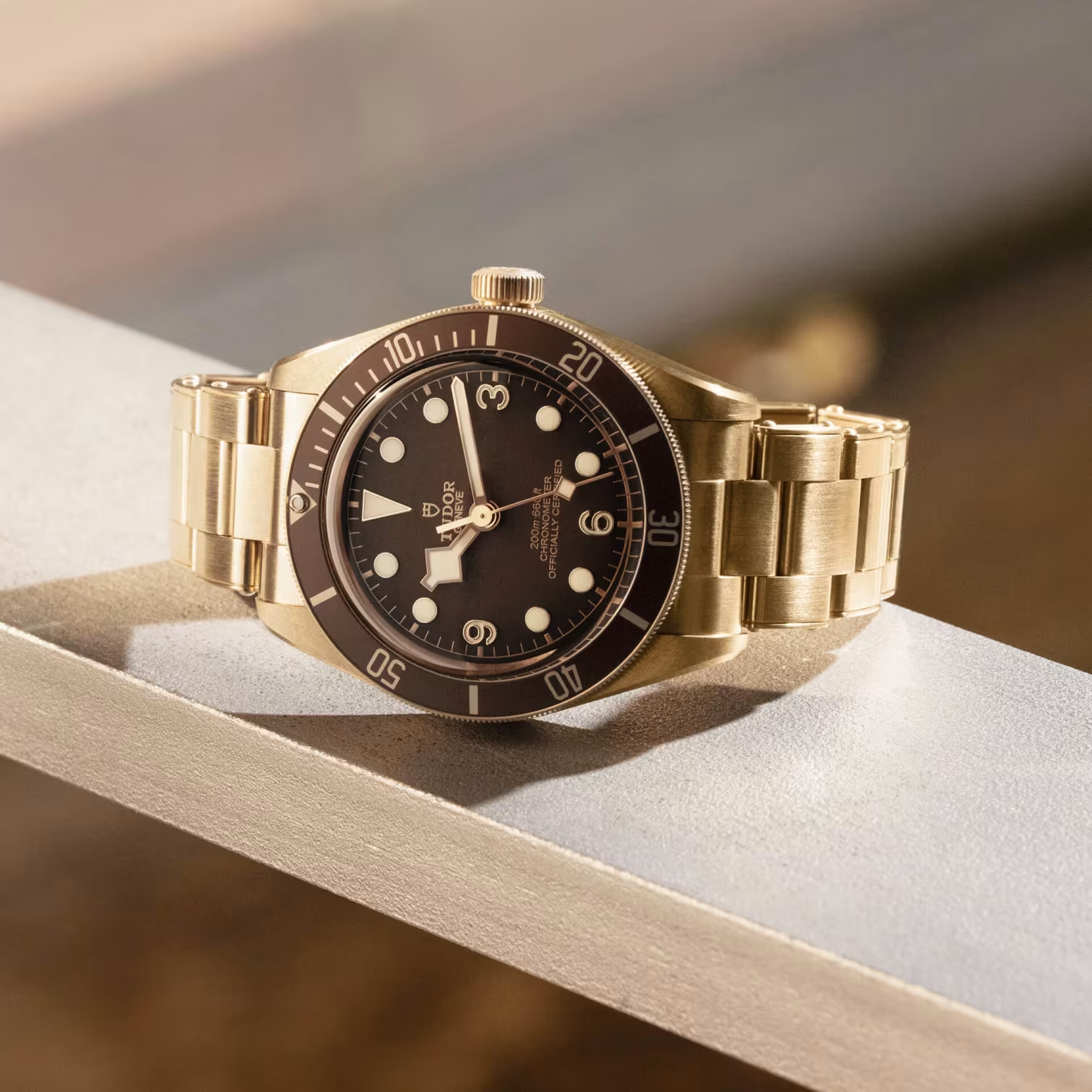
If the bronze wave established itself as a trend in the 2010s, it owes a great deal to a handful of charismatic models. The Panerai Luminor Submersible “Bronzo” led the way, imposing a sculptural case and a bronze that darkens with panache. Tudor democratised the concept with the Black Bay Bronze, a successful blend of tool-watch purpose and retro charisma. Oris multiplied the nods with its Divers Sixty-Five and Big Crown in bronze, while Bell & Ross, Zenith, IWC or Montblanc explored the pilot aesthetic and workshop spirit. On the independent side, brands such as Baltic, Yema or Zelos proved that bronze could be paired with more accessible timepieces without sacrificing style.
In every case, the material is not a gimmick: it serves the watch’s narrative. Diver, pilot, field watch… Bronze immediately calls up a tactile, textured vocabulary that adds relief on the wrist.
How to live with patina
Let it live, yes—but with a little consideration. Bronze doesn’t require extravagant precautions, just simple, regular attention.
- After the sea: a rinse in fresh water is enough to prevent salt crystallisation.
- Day to day: a gentle wipe with a microfibre cloth keeps the glow without fighting the patina.
- Want to start from scratch: a Cape Cod-type cloth, or a mild lemon/bicarbonate mix, brings back shine; rinse and dry carefully.
- Keep an eye on: verdigris in the crevices (between lugs, under the bezel) should be cleaned as soon as it appears to preserve fit and tolerances.
- On the wrist: most brands use a steel or titanium caseback to avoid greenish marks on the skin. If the metal leaves a slight trace, it’s harmless.
Style-wise, bronze loves brown leather, sand nubuck, textured NATOs, cocoa-toned rubber. Forest-green, petrol-blue or grained black dials converse particularly well with patina. As the seasons change, swapping straps is enough to refresh the look without betraying the spirit of the piece.
Material as a manifesto
Choosing bronze is to claim an unflinching relationship with time. Far from the pursuit of immaculate perfection, you accept imperfection as beauty. The watch becomes a travel journal: it takes rain, sun, streets and shorelines. For many enthusiasts, this material brings watchmaking into an almost intimate register, beyond the spec sheet.
Technically, advances in alloys have also reassured: more stable and less prone to skin reactions, they patinate in a harmonious way. Finishes—sandblasted, micro-bead-blasted, brushed—further accentuate the variations and add depth from day one.
And tomorrow?
Bronze still has stories to write. We will see it paired with ceramic bezels, lacquered or smoked dials, slimmer proportions. Some workshops are exploring aluminium bronzes for more golden tones; others are playing the CuSn8 card for a more assertive patina. Far from running out of steam, the trend is becoming more refined: less demonstrative, more controlled, it is settling in as a fully fledged aesthetic language within watch design.
By way of conclusion
If bronze watches age so well, it’s because they understand something about us: time is not an enemy—it is a material. Patina is its visible proof, a signature that cannot be copied. Between maritime heritage, tactile emotion and a keen sense of style, bronze stands out as one of the most contemporary materials in today’s watchmaking—precisely because it embraces its nature: living, changing, profoundly human.