Why Vintage Dive Watches Are So Sought After
Beneath the surface, a story of culture
They smell of salt and seaplane kerosene, of briefings by the glow of a hurricane lamp, of Cousteau’s waterlogged notebooks. Vintage dive watches are not merely tool watches: they are fragments of epic tales. At a time when everything is measured to a tenth of a millimetre and the last lumen, these timepieces—born to survive the pressure of the abyss—have acquired another kind of gravity: that of style, memory and collecting. Why do they exert such pull? Because behind every knurled bezel lies a genuine purpose—a promise of adventure whose patina only deepens the charm.
The golden age under the sea
In the early 1950s, the dive watch left the drawing board for the wrists of combat swimmers. In 1953, the Blancpain Fifty Fathoms, developed with Robert Maloubier and Claude Riffaud, set the template: a unidirectional rotating bezel, serious water resistance, uncompromising legibility. That same year, Rolex refined its Submariner, soon to be unveiled to the public, and Omega got to work on the Seamaster 300 (1957). Later, Doxa introduced professional orange (Sub 300, 1967), Seiko democratised Japanese reliability with the 62MAS (1965), and Tudor equipped the Marine Nationale. Each reference is not a styling exercise: it is a tool proven offshore, in hyperbaric chambers or on ship decks.
What vintage has that others don’t
Patina, that discreet luxury
Radium then tritium, acrylic crystals, Bakelite inserts: yesterday’s materials age with nobility. Creamy markers, “tropical” dials turned chocolate, greyed-out “ghost” bezels… This patina tells a story of use. Far from being frozen relics, a vintage diver lives, bears the marks of time, and makes each piece unique—exactly what collectors seek above all.
Just-right proportions
36 to 40 mm, restrained thickness, tapered lugs: historic dive watches slip under a tweed cuff as easily as they hold their own with a leather jacket. Their ergonomics—born of function—become a manifesto of timeless design. Tool-watch restraint has the chic advantage of going with everything.
Stories written in steel
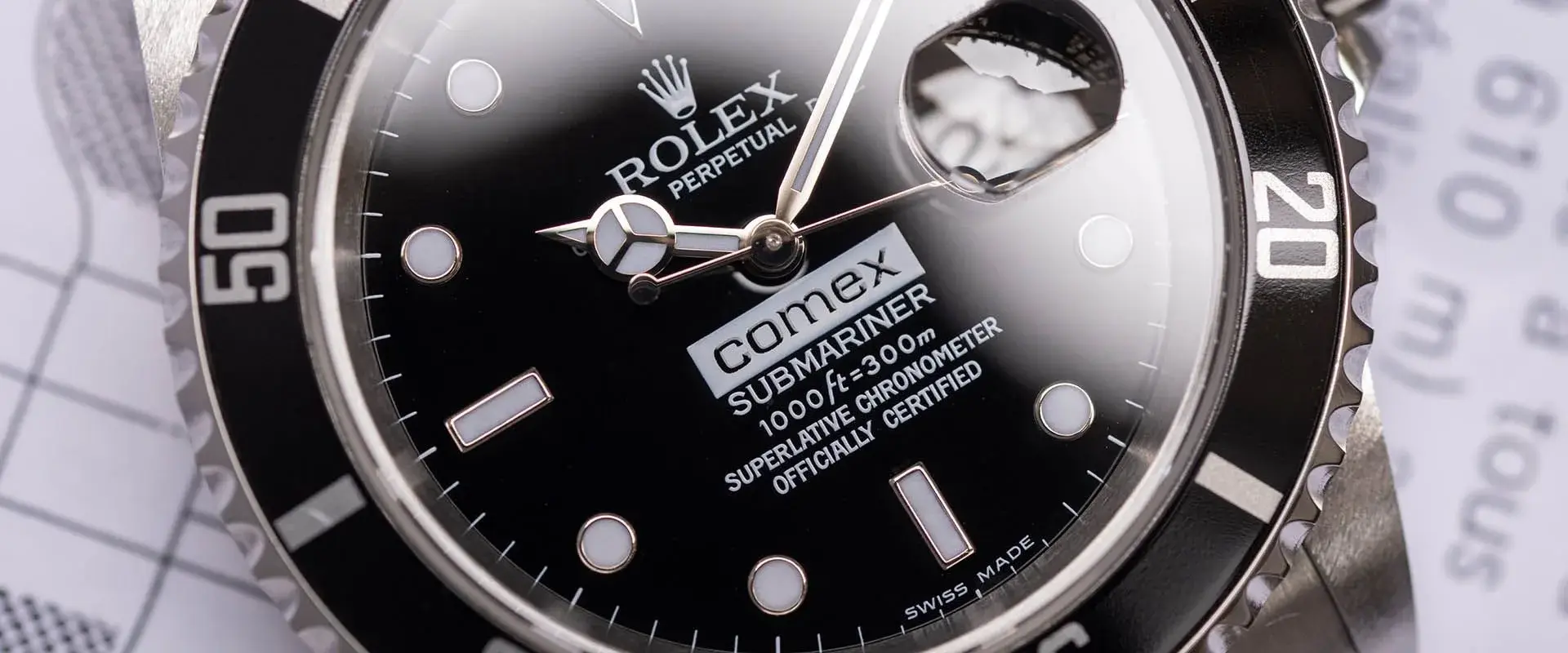
Military insignia on the caseback, serial numbers, period paperwork, engravings from a diving club: vintage pieces carry traces. From the Submariner COMEX to Tudor MN, from the Seiko “Willard” spotted in Apocalypse Now to the Longines “Super Compressor”, these watches offer more than a spec sheet; they deliver a chapter of popular culture and industrial history.
Rarity and rational desire
Limited production, survivors of real-world use, dial variants, crowns or hands: rarity fuels desire. But value is not just speculation. Good vintage is the right meeting of authenticity, condition and provenance—a trio the market knows how to reward.
Icons that set collectors’ hearts racing
- Blancpain Fifty Fathoms: the 1953 blueprint. “Mil-Spec” versions with a moisture indicator are grails in their own right.
- Rolex Submariner 5513/5512: pure lines, “gilt” dials on early series, faded bezels… the diver’s canon.
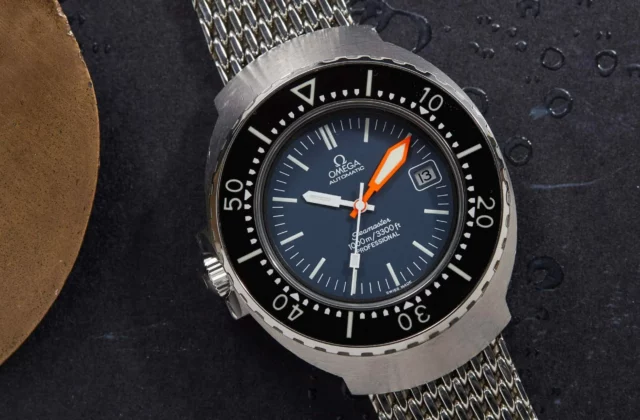
- Omega Seamaster 300 CK 2913: broad arrow, the technical elegance of the Speedmaster era; a sports watch with impeccable pedigree.
- Doxa Sub 300: orange dial, “no-deco” bezel validated by the US Navy and Cousteau. The tool turned cult.
- Seiko 62MAS & 6105 “Willard”: toughness, organic design, an unbeatable quality-to-emotion ratio for getting into collecting.
- Longines Legend Diver (period 7042): EPSA “Super Compressor” case, twin crowns, gentleman-diver chic.
- Tudor Submariner “Snowflake” MN: angular hands, sought-after French military provenance.
Reissues, pop culture and the halo effect
Well-executed reissues—from the Fifty Fathoms to today’s Legend Diver models—have rekindled the flame. They act as gateways, nudging enthusiasts towards the originals. Cinema and diving archives catalyse the imagination, from James Bond to documentaries by the Cousteau team. The result: strong, international demand for authentic vintage dive watches, where history goes beyond mere aesthetics.
How to start a vintage dive-watch collection
- Prioritise authenticity: period-correct dial, hands, bezel and crown. “Service” parts reduce value.
- Hunt for coherent patina: similar tones between markers and hands, intact lacquer, no crude re-luming.
- Inspect the case: sharp edges, full lugs. Excessive polishing erases character—and value.
- Verify references: serial numbers, “T Swiss T” markings, engraved casebacks; request archive extracts if possible.
- Water resistance: never assume it. A visit to a watchmaker for gaskets and a pressure test is essential.
- Provenance and paperwork: invoices, dive cards, period photos—every document tells a story and secures the purchase.
- Listen to the market: “tropical” variants, military series or first generations concentrate desirability.
Without further ado, you may be interested in this related article: « What is the bezel on dive watches for?« .
Should you still dive with one?
Sometimes you can, after a proper service and a water-resistance test. But most collectors avoid salt water. Gaskets age, thermal shocks lurk, and an original dial is worth more than a few heroic lengths. The elegant compromise? Wear your vintage diver every day, and keep a modern watch for the pool.
The magnetism of the real tool
If vintage dive watches are so sought-after, it’s because they marry the useful with the emotional. They distil a technological golden age, a universal silhouette, and a density of stories that no new release can imitate. In a world of connected objects, they reconnect us with the essentials: a domed crystal, a bezel that clicks, hands advancing with the steady rhythm of the swell. And on the wrist, the calm impression of carrying a piece of the ocean with you.