Why the Blue Dial Remains a Symbol of Masculine Elegance
Blue, a shade that tells a story
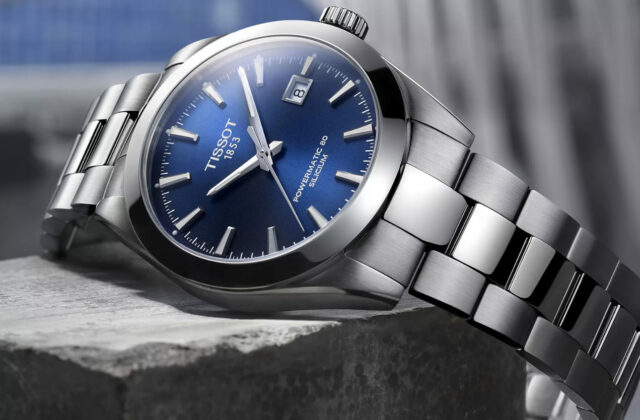
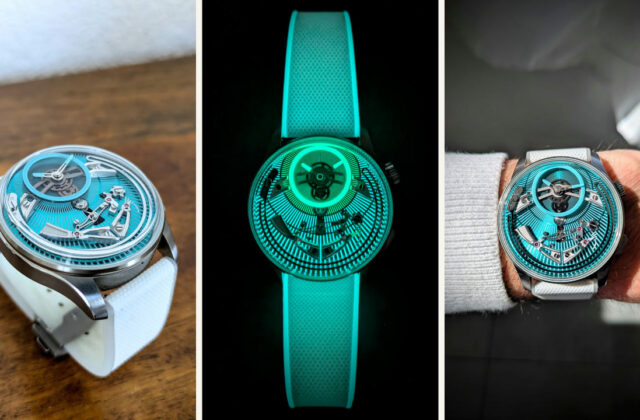
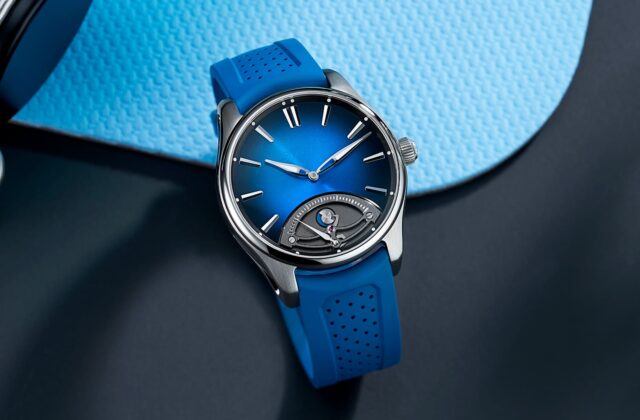
There is, in a blue dial, a silent promise. That of understated luxury, of masculine elegance that doesn’t seek approval yet naturally draws the eye. Blue conjures the deep sea, the uniform, the sky at the moment night settles in. It is the colour of trust and constancy—two cardinal virtues in a man of taste. In watchmaking, this shade is not a fashion effect: it is a language. The moment light catches it, the blue dial is already telling something else: time, certainly, but also the art of wearing it—just as blued screws in a movement add a touch of technical refinement.
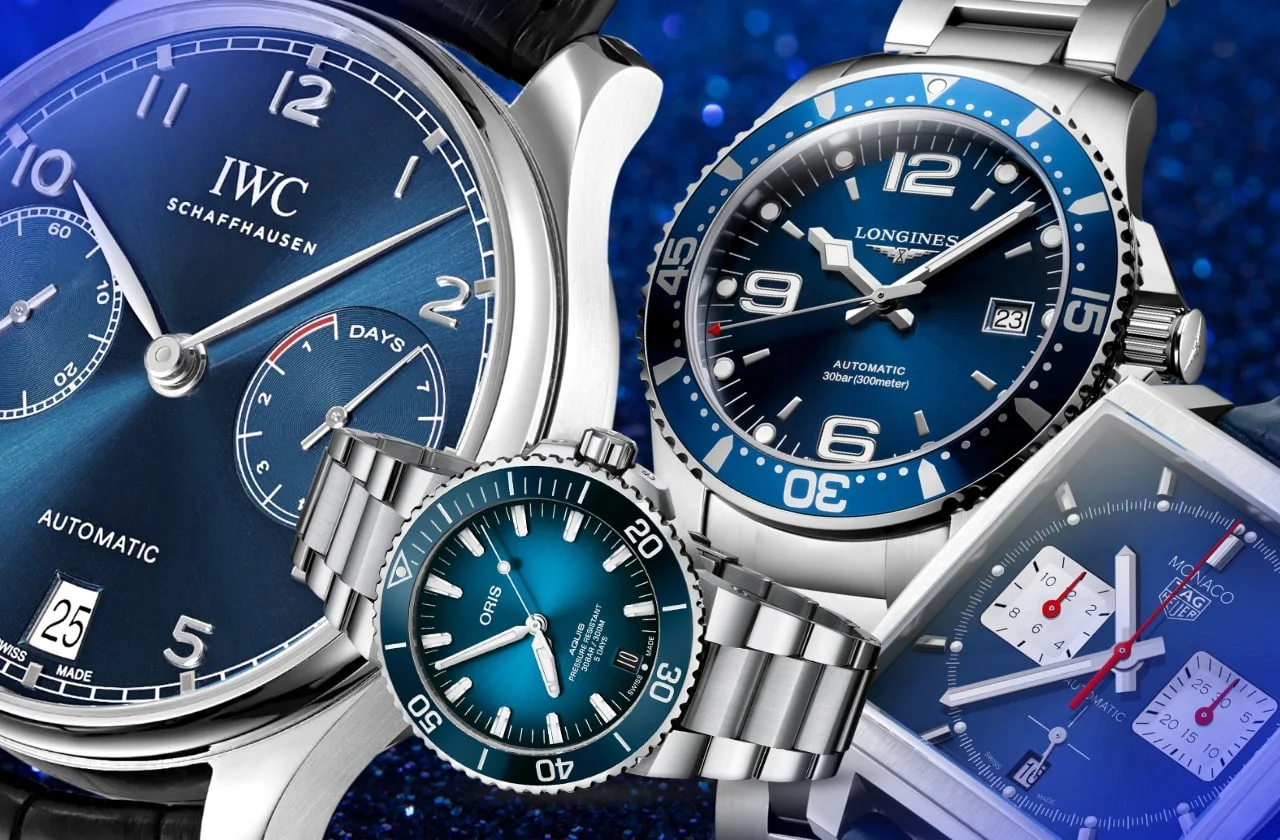
Blue is, first and foremost, utilitarian. Marine chronometers, onboard instruments and, later, pilots’ watches inherited these dark nuances that favour legibility. Then blue migrated from deck to wrist, from cockpit to boardroom. One common thread: exacting standards. In a world saturated with stimuli, the depth of a well-executed blue soothes, structures, reassures. It pairs with a white shirt and grey flannel, yet also finds its place above faded denim. That is when it becomes a symbol: when a colour adapts to every life without relinquishing distinction.
A long-running watchmaking story
The blue dial made sporadic appearances as early as the interwar years, on enamelled pieces and subtle guilloché work. But it was in the 1970s that it forged its legend, as steel sports-chic rose to the summit of luxury. The meeting of brushed metal and deep blue is no accident: it is the expression of an era that married performance and refinement—yacht clubs and trading floors. The great maisons then cemented the idea that a blue dial could do it all: weekend ease, office rigour, an evening in town.
The icons that sealed the myth
- The steel sports-chic watches of the 1970s, whose sunburst blue dials defined the archetype of relaxed elegance.
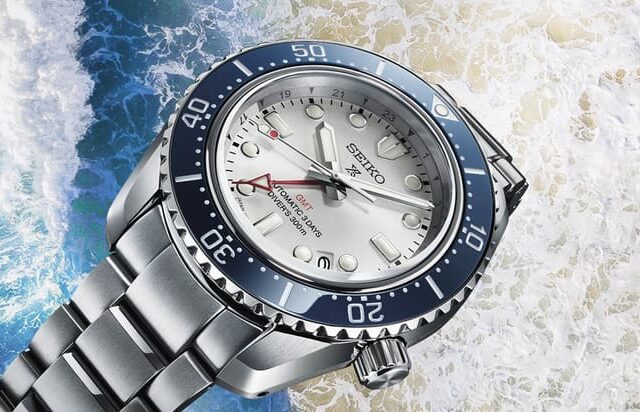
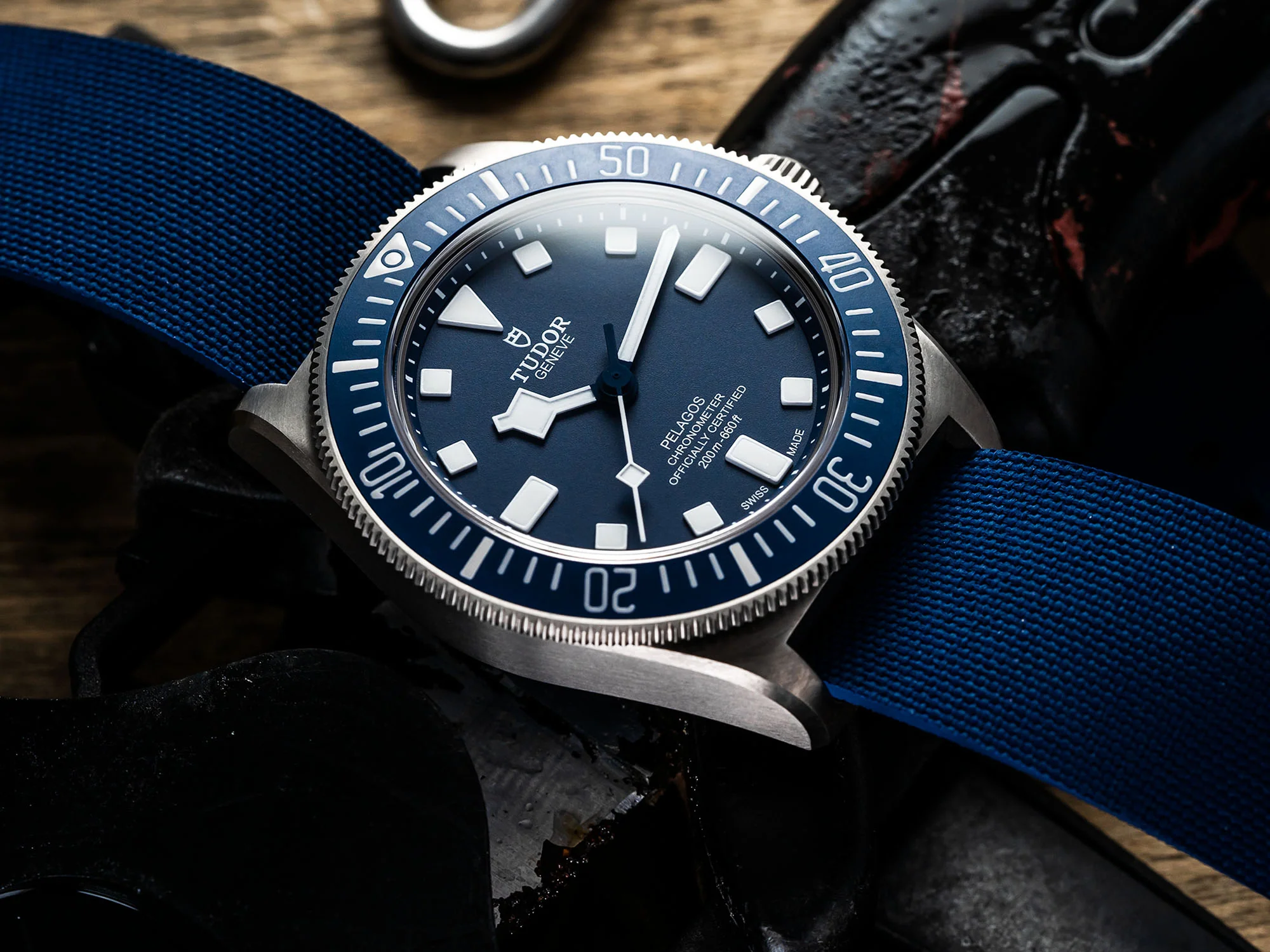
- Contemporary dive watches, where blue evokes the water column and elevates the tool into an object of desire.
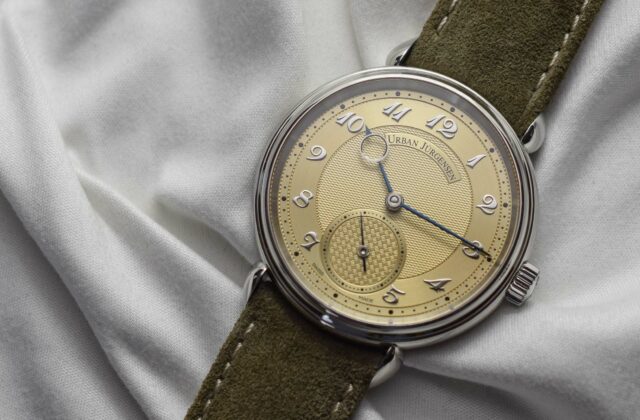
- Classic dress pieces, in German silver or grand feu enamel, proving that blue can be perfectly protocol-ready.
Each decade added its own nuance, from petrol blue to midnight blue. And each maison stamped it with its signature, from circular brushing to wave guilloché, all the way to smoked gradients that play with shadow and light.
The grammar of the blue dial
A blue dial is never a simple “colourway”. It is an optical playground. Its character depends on the material, the finishes, the thickness of the lacquer, the way the indexes catch the gleam. Some blues absorb light and lend the watch a sleeker, more elongated look. Others throw it back and carve the form. In every case, the aim is to strike the right balance between presence and restraint: that ridgeline where elegance is suggested rather than declared.
Finishes that change everything
- Sunburst blue: radial brushing that animates every wrist movement, an icon of everyday chic.
- Lacquered blue: icy, smooth depth—a modern mirror with almost liquid reflections.
- Opaline blue: silky matte, ideal for a dress register and exemplary legibility.
- Blue guilloché: a noble texture, with patterns and shadows for a tactile kind of luxury.
- Blue grand feu enamel: mineral intensity, unalterable, lending a heritage aura.
- Smoked blue (gradient): from light at the centre to black at the edge, a subtle dramatisation of time.
Details that define luxury
- Polished or faceted applied indexes that slice through the light.
- Rhodium-plated dauphine or baton hands, sometimes with a discreet touch of luminescence.
- Pearled minute track or fine railway track, for an unapologetically horological “rhythm”.
- Tone-on-tone date frame, avoiding a chromatic break.
- A worked rehaut, adding depth without thickening the silhouette.
Style: how to wear it
The blue dial is a passport. It crosses style borders with rare ease. On steel, it asserts a contemporary temperament. On leather, it takes on a more learned air. On rubber, it embraces the utilitarian-chic spirit. The modern man finds in it an ally that simplifies the wardrobe while multiplying possibilities.
From the office to the weekend
- Charcoal suit and black Oxfords: opaline blue dial, polished steel case, slim enough to slip under a cuff.
- Navy blazer, grey trousers: sunburst blue in brushed steel for a tone-on-tone dialogue that is never monotonous.
- Raw denim, Oxford shirt: smoked blue on chocolate or taupe leather, sophistication without fuss.
- Summer linen, loafers: light blue lacquer, fine hands, Milanese mesh for lightness.
- Sporty weekend: blue diver on rubber, light denim and a white T-shirt—utility with style.
Finding your blue
- Shade: fair skin gains character with midnight blue; warmer complexions are elevated by petrol or royal blue.
- Case material: brushed steel disciplines the shine; rose gold warms the blue; titanium makes it feel technical.
- Strap: grained grey or brown leather for dressier looks, integrated steel for sports-chic, blue rubber for a tool watch.
- Proportions: a blue dial visually “enlarges” the watch; aim for 1 to 2 mm less than usual if your wrist is slim.
- Legibility: prioritise strong index/blue contrast and avoid overly reflective lacquers for office wear.
Why it endures
The reason lies in that rare balance between classicism and modernity. A blue dial has the discretion of grey and the expressiveness of green. It speaks loudly without shouting. It harmonises with everyday steel, the leather of a loafer, the drape of a wool coat. In the language of colour, blue inspires trust and reliability—values that resonate with men, and that a watch, the most intimate of objects, embodies close to the skin.
In three reasons
- Timeless: beyond cycles, blue remains, because it is neither whim nor uniform, but an obvious choice.
- Versatile: a single blue watch travels from boardroom to dinner, from sea to salon, without a misstep.
- Cultural: from 1970s icons to contemporary classics, blue has written the grand story of luxury.
Choosing a blue dial is accepting a long conversation with your wrist. You return to it, as you return to the sea. Each morning, the light rekindles a different nuance, a mood, a tempo. Masculine elegance is not a parrot: it does not imitate, it interprets. And blue, more than any other shade, offers it its favourite score. In a hurried world, a blue dial reminds us that style is often decided in the inflection—in that sudden, almost secret shimmer that marks the watches you keep.