Water Resistance of Watches
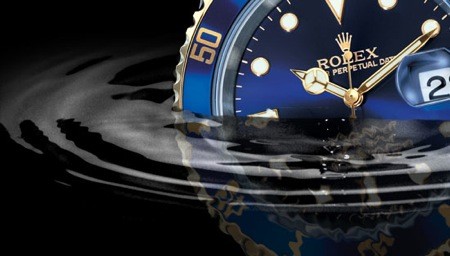
Between Water Resistant markings, ATM ratings, metres and ultra-cautious manuals, it’s easy to get lost. A watch rated to 30 m, 50 m or 100 m—what does that actually mean in practice? Can you swim with a 30 m watch? From what point is a watch truly made for diving?
This article aims to explain, clearly and practically, what a watch’s water resistance is, how to read the indications on the caseback, what you can reasonably expect as a consumer, and why not all “30 m” watches are created equal.
I’ve been writing on Montres-Passion since 2010 and I’ve worked in the watch industry: what follows blends technical principles, standards, and what we actually see in the real world with well-designed watches… and others that are far less so.
What is a watch’s water resistance?
A watch’s water resistance describes its ability to withstand water ingress under a certain pressure. It mainly depends on the water-resistance test.
- the case design;
- the quality and positioning of the gaskets (caseback, crystal, crown, pushers);
- how the watch is assembled and checked;
- the condition of these elements over time (ageing, impacts, openings, etc.).
This resistance is expressed in:
- ATM (atmospheres);
- bar (1 bar ≈ 1 ATM);
- or in theoretical depth in metres.
To simplify:
- 3 ATM ≈ 30 m;
- 5 ATM ≈ 50 m;
- 10 ATM ≈ 100 m;
- etc.
But these values come from pressure-chamber tests under static pressure, with the watch motionless and the gaskets new. Real life—with movement, impacts, hot water and chemicals (soap, chlorine, salt)—is more demanding.
Labs, pressure chambers and real life: why metres are misleading
When a watch is tested at the factory, it is subjected in a chamber to a pressure equivalent to a certain depth:
- the watch is stationary;
- the water temperature is controlled;
- the pressure is static and uniform;
- the gaskets are new and perfectly seated.
In real life, the watch is subjected to:
- wrist movements (swimming, diving in, watersports);
- concentrated jets (shower, slides, water games);
- sometimes abrupt temperature changes (hot shower after cold, sauna, jacuzzi);
- gasket ageing (drying out, compression set, micro-tears);
- caseback or crown openings during servicing, which must be followed by a new water-resistance test.
That’s why you so often hear that “30 m doesn’t mean you can dive to 30 m”. That figure corresponds to a laboratory test pressure, not a depth “guaranteed in all circumstances”.
Water-resistance standards: dress watches vs dive watches
Without getting too technical, there are two broad approaches:
- Watches simply described as “water resistant” (30, 50, 100 m) intended for everyday use: daily life, and sometimes swimming or snorkelling, depending on the stated level.
- Dive watches, designed for repeated use underwater, with more stringent tests (overpressure, gasket ageing, impacts, salt water, legibility, etc.). These watches are often marked “Diver’s 200 m”, “Diver’s 300 m”, etc., and built like genuine instruments.
For most users, the question is simple: what is the minimum water resistance to stop worrying at the pool, at the beach or on holiday? And that’s where an important distinction comes in: not all 30 m watches deserve the same level of trust.
Not all 30 m watches are created equal
The “30 m / 3 ATM” marking does not carry the same weight depending on whether we’re talking about:
A serious watchmaking piece
- A properly designed case, clean casing-up;
- appropriate gaskets and water-resistance checks at the end of production;
- a network of watchmakers able to test and replace gaskets.
With this type of watch, it’s reasonable to consider that a “30 m” marking corresponds to a watch capable of handling, without drama:
- everyday life (rain, hand-washing, splashes);
- a calm swim in a pool, at the surface, provided the watch is in good condition and properly closed.
In other words, on a serious watch, “30 m” shouldn’t be a marketing joke. If a recent watch, properly closed, takes on water during its first gentle swim, the problem is mainly with the watch, not the customer.
A decent entry-level watch
You’ll also find entry- or mid-range watches that aren’t haute horlogerie, but are cleanly assembled, with reasonable gaskets and quality control. Here too, a well-designed 30 m watch will, in practice, withstand more than the deliberately ultra-cautious manuals dare to promise.
Marketing “water resistant 30 m” junk
- A watch sold above all as a fashion accessory;
- basic gaskets, inconsistent quality control;
- “30 m” printed because it reassures, without the construction to back it up.
With this type of product, it’s wise to treat “30 m” as a purely cosmetic indication. Consider it splash-resistant, nothing more: hand-washing, rain—end of story.
Water-resistance levels: reasonable use cases
| Indication | Generally recommended uses | On a well-designed, well-maintained watch |
|---|---|---|
| 3 ATM / 30 m | Hand-washing Rain, splashes | Everyday life without worry A calm swim in a pool, at the surface, if the watch is recent and properly closed On a low-end “fashion” watch, stick to splashes only. |
| 5 ATM / 50 m | Occasional immersion Gentle surface swimming | Regular pool use without overthinking it Playing in the water, prolonged swims Lukewarm showers possible, as long as you’re sensible about heat and frequency |
| 10 ATM / 100 m | Swimming Surface snorkelling | Regular pool, sea and snorkelling use Frequent water use without any particular fuss Showers and baths possible if the watch is maintained |
| 20 ATM / 200 m | Watersports Recreational scuba diving | A watch made to “live in the water” Regular recreational diving, intense watersports |
| Diver’s 200 m, 300 m and more | A full-fledged dive watch | Serious scuba diving Intensive and professional use in aquatic environments |
The real enemies of water resistance (even on a good watch)
Beyond the rating in metres or ATM, several factors come up again and again in “drowned” watches:
- Crown not fully pushed in or not properly screwed down before going into the water;
- Operating the crown or pushers in the water (setting, chronograph, correctors);
- Ageing gaskets on a watch that has never been checked;
- Very hot showers, saunas, steam rooms, jacuzzis that wear out gaskets (expansion, chemicals, thermal swings);
- Impacts, drops, caseback openings not followed by a water-resistance test.
A few simple rules:
- Always check that the crown is properly pushed in or screwed down before going into the water.
- Avoid operating the crown and pushers in the water, unless the system is specifically designed for it.
- Rinse the watch with fresh water after the sea or the pool.
- Have water resistance checked regularly, especially if the watch is often in the water.
FAQ: common questions about watch water resistance
Can I swim with a 30 m watch?
On a serious watchmaking piece that is recent and in good condition, a calm swim in a pool, at the surface, is generally tolerated without issue—provided you follow the basic rules (crown properly closed, no pushers underwater, no scorching sauna right afterwards). On a low-end or purely “fashion” watch, it’s safer to treat 30 m as simply “splash resistant”.
From what level can I swim without thinking about it too much?
For most uses (pool, sea, holidays), a properly built and maintained 50 or 100 m watch is more than sufficient. If the watch is old or has never been serviced, a water-resistance check is preferable before letting it live in the water.
What water resistance for scuba diving?
For serious scuba diving, you’ll want a dedicated dive watch, generally rated to 200 m or more, with robust construction, a screw-down crown and appropriate water-resistance testing. For simple swimming and snorkelling, a good 100 m watch is already enough.
Should you shower with your watch?
Technically, a good 50 or 100 m watch can handle the shower. But very hot water, soap and temperature changes wear out gaskets over time. If you care about your watch, the wisest course is to limit showering with it, and to rincer votre montre with clean water if it has been exposed to products (soap, shampoo, chlorine, salt).
In summary
The water-resistance indication (30, 50, 100 m, etc.) gives an idea of a watch’s resistance to water, but it says nothing about the true quality of its construction. On a serious watch, “30 m” shouldn’t be an empty promise: you can reasonably expect surface pool use if the watch is in good condition. On a watch of questionable quality, the same “30 m” is sometimes worth little more than protection against splashes.
Understanding what water resistance really covers helps you choose the right watch for your use—and, above all, use it knowingly, without banning all contact with water… or taking unnecessary risks.